










































Turning the Tide on Ebola: Scaling up Public Health Campaigns Before it's Too Late
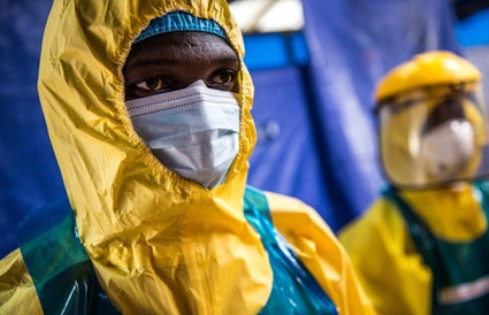
This 4-page briefing document, published by Oxfam International, discusses the importance of public health campaigns in the 2014 Ebola outbreak in West Africa, arguing that prevention and treatment must go hand-in-hand, and that sufficient funding must be allocated for this sometimes forgotten aspect of outbreak control. According to the briefing, "public health campaigns involving community engagement and social mobilisation are key aspects of reducing transmission rates, and require appropriate prioritisation in the international response. Community leaders are best positioned to identify ways to stop the virus spreading in their communities and are key to improving case finding and outbreak control."
The briefing discusses the fact that community engagement is important as people in West Africa have no previous experience with Ebola, which contributes to misunderstandings and stigma that challenge controlling infections. This stigma, along with traditional practices surrounding burials, is contributing to the outbreak. People respond by keeping ill family members in the home, and traditional practices that require touching the dead body are hard to break. The document explains that interventions and careful messaging, which are based on community engagement, are therefore required for people to change their behaviour.
The briefing note also shares findings of a study on knowledge, attitudes, and practices related to Ebola prevention and medical care in Sierra Leone, conducted in August 2014. This study showed high levels of awareness of Ebola and positive attitudes to prevention methods. However, the study also found that people would not in reality avoid people suspected of having Ebola, and that widespread misconceptions exist. For example, "42% believe that bathing with salt and hot water can prevent Ebola." Respondents also demonstrated high levels of stigma, "76% would not welcome a neighbour back into their community after recovering from Ebola."
The note discusses lessons from other outbreaks, which show that community mobilisation and information campaigns were vital in controlling similar outbreaks, both for providing accurate information and countering stigma. Engaging with the community as an active part of the solution is also vital. For example, in the urgency of an outbreak, the setting up of medical facilities is often prioritised and local leaders are side-lined. Yet, experience shows that from the outset of an outbreak good information campaigns and working with local authorities is vital to contain the infections.
With this in mind, Oxfam calls on donors and implementing partners to ensure that the community mobilisation element of the United Nations reponse plans, which are outlined in the brief, is fully funded and swiftly implemented. The brief concludes with Oxfam's strategy to address the Ebola outbreak. The organisation is planning to use their "expertise in high quality public health promotion" and Water, Sanitation and Hygiene (WASH) experience in Ebola affected and vulnerable communities. This will include helping to provide access to WASH facilities, giving a voice to communities so their concerns are taken into account, and informing key national, regional, and international stakeholders of critical gaps and solutions. Oxfam also intends to help ensure that three surrounding countries remain Ebola free by conducting mass public and community awareness campaigns, training health workers, and helping to provide equipment and supplies.
Oxfam website on November 5 2014.
- Log in to post comments