










































Revisiting COVID-19 Communication in Western Africa: A Health Literacy-based Approach to Health Communication
bnscommunication (Seytre); Universidade de Cabo Verde (Barros); Association for Sustainable Development (Bona); West African Health Organization (Fall); Institut des Sciences des Sociétés (Konaté); Bandim Health Project (Rodrigues); Universidade de Cabo Verde (Varela); Université Houphouët-Boigny (Yoro)
"9 months into the COVID-19 pandemic, communication efforts have succeeded in transmitting certain major elements of knowledge regarding the disease; however, other critical elements that could allow the population to fully understand the necessity of the protective measures are missing...
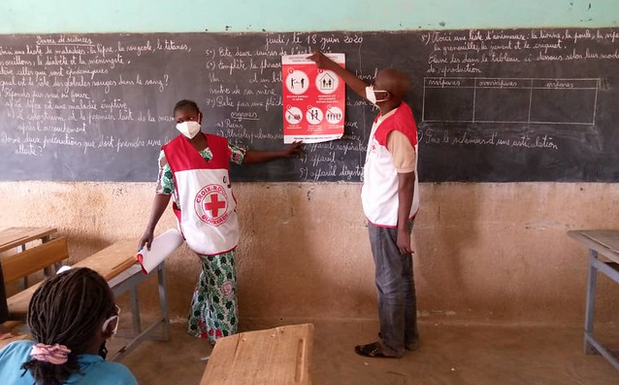
In the wake of the COVID-19 pandemic, governments have devoted substantial efforts to disseminating messages that encourage people to respect protective measures (wearing masks, washing hands, practicing physical distancing, and avoiding hugging and shaking hands). At the same time, an "infodemic" involving the rapid spread of rumours and false information that could interfere with adherence to these protective measures has developed. In this context, the West Africa Health Organization (WAHO) requested an analysis of the efficacy of COVID-19 communication and recommendations for an adapted communication strategy. Thus, the researchers conducted a quantitative socio-anthropological study of COVID-19 health literacy in five West African countries.
The countries surveyed included Cabo Verde, Burkina Faso, Guinea-Bissau, Ivory Coast, and Sierra Leone, because of their official language diversity (two French-speaking countries, two Portuguese-speaking countries, and one English-speaking country) and their variations in size, economic development, and geography. Sierra Leone was selected because of its previous experience with an Ebola virus disease epidemic. From October 16 to November 20 2020, the researchers conducted in-person interviews with 400 people in urban areas of each country.
The study found some gaps in knowledge about the reality, causal agents, and symptoms of COVID-19. For example, although 48.0% to 94.0% of interviewees knew that the virus is found in people who have COVID-19, less than half knew that it can also be found in asymptomatic people. Similarly, the majority thought only symptomatic people can transmit the disease. Approximately one-third of the population thought mosquitoes or wild animals can transmit COVID-19, and a significant number of people thought raw meat, fish, cats, dogs, and eggs can transmit the disease.
With regard to the prevention and treatment of COVID-19, a substantial number of people indicated they believe that various plants or substances protect against COVID-19. Although garlic, lemon juice, neem leaf infusions, and hot drinks are often considered protective against various diseases in African cultures, it seems that drinking bleach or disinfectant had never been considered protective or curative until the widely broadcast declarations by President Trump in the United States, who said swallowing these products could be beneficial. Per the researchers: "The fact that some of the erroneous ideas originated from erroneous communication messages highlights the effectiveness of the penetration of communication messages and the responsibility of health communicators and politicians to verify the accuracy of their communications." (For more on this argument, see Related Summaries, below.)
Observations by the team of investigators that were documented by photographs showed that wearing masks and physical distancing are not sufficiently respected by the populations in Burkina Faso, Guinea-Bissau, Ivory Coast, and Sierra Leone. However, the survey found that almost everyone had heard or read the messages promoting the protective measures, and that the majority of people thought these measures effectively prevent COVID-19. Therefore, nonadherence is not attributable to a lack of knowledge or a lack of understanding, and the researchers "cannot expect that repetition of these messages alone would change the behaviors."
Therefore, they conclude, communication efforts must be redirected to no longer focus on the protective measures, which people know about but do not sufficiently practice. Instead, it seems that significant lack of understanding of the coronavirus infection history revealed by the study likely contributes to the insufficient adherence to the protective measures. The researchers propose a 4-point strategy to increase the COVID-19 health literacy level:
- Explain that asymptomatic people can transmit the virus: "How can we make people understand that everybody must respect the protective measures if they think that only sick individuals can transmit the virus? How can we make people adhere to these measures when they think that an animal or an egg is more likely to transmit the virus than people next to them on a bus?"
- Increase knowledge of the risk factors for serious illness: The risk factors for serious forms of COVID-19 (older age, diabetes, cardiovascular diseases, and excessive weight) are not sufficiently known, and there are differences between countries and risk factors. Knowledge of these risks would provide motivation for adopting the protection measures when in the presence of someone at risk.
- Reach out to young populations with appropriate messages: Young West Africans are aware they are at lower risk for COVID-19 than older people; therefore, specific messages should be designed to convince them to adopt the protective measures. Specifically, in addition to explaining that one can be asymptomatic and still transmit the coronavirus, these messages should call on their responsibility to protect friends and family members who are at risk because of chronic disease or age.
- Reassure populations that it is safe to visit health centres: The results show deep concern among people regarding contracting COVID-19 at health centres, which is likely to contribute to the observed decrease in the prevention, diagnosis, and treatment of diseases other than COVID-19.
In conclusion: "The results of this study and the consequent communication strategy are likely to be applicable to other...sub-Saharan countries."
Editor's note: Click here for a related perspective piece by Bernard Seytre titled "Public Perceptions, More Than Misinformation, Explain Poor Adherence to Proven COVID-19 Control Measures". Here is an excerpt: "One cannot propose an intelligible epidemic control policy and design a relevant communication strategy without studying the perceptions of the population....First, determining the COVID-19 health literacy level will allow communication campaigns to avoid inappropriate messages that could inadvertently raise doubts and distrust. For example, an overemphasis on the need to get vaccinated could raise suspicions among people who believe they are not at risk of being infected, opening the door to conspiracy theories around the government push on vaccination. Second, determining COVID-19 health literacy will allow communication campaigns to design more effective plans and messages....Changing the focus from the infodemic to the actual perceptions of the population is a necessary condition to build an 'evidence-based' COVID-19 communication strategy in which the 'evidence' includes the perceptions of the population."
The American Journal of Tropical Medicine and Hygiene 105(3), 2021, pp. 708-12. https://doi.org/10.4269/ajtmh.21-0013 - sourced from "Public Perceptions, More Than Misinformation, Explain Poor Adherence to Proven COVID-19 Control Measures", by Bernard Seytre, The American Journal of Tropical Medicine and Hygiene 00(00), 2022, pp. 1-3 doi:10.4269/ajtmh.21-1251, which was sent from Bernard Seytre to The Communication Initiative on February 23 2022; and email from Bernard Seytre to The Communication Initiative on February 25 2022. Image credit: Cruz Roja Española (Burkina Faso, Sensibilización COVID 19 escuela de Oudalan) via Flickr (CC BY-NC-SA 2.0)
- Log in to post comments