










































A Review of Strategies Used to Retain Participants in Clinical Research during an Infectious Disease Outbreak: The PREVAIL I Ebola Vaccine Trial Experience
Partnership for Research on Ebola Virus in Liberia, or PREVAIL (Browne, Carter, Johnson, Moore); National Institutes of Health, or NIH (Eckes, McNay); University of Minnesota (Grandits)
"An extremely robust and culturally confident team was engaged in PREVAIL to address social fears and stigma."
This review illustrates the importance of host country social mobilisation and community engagement strategies to retain participants in an emergency clinical research response vaccine trial conducted in a resource-poor, population-dense setting in urban Liberia.
In August 2014, the World Health Organization (WHO) declared the Ebola outbreak in West Africa a public health emergency of international concern. Liberia and the United States agreed to a clinical research partnership in October that year and, in February 2015, the Partnership for Research on the Ebola Virus in Liberia (PREVAIL) I Vaccine Trial commenced recruitment at Redemption Hospital in New Kru Town (NKT). At the time, this facility was closed to the community because of the general fear of Ebola and the deaths of healthcare workers in the facility resulting from Ebola infection. Among the complexities: The NKT community is characterised by inherent distrust of the Liberian government, medical science, and clinical research trials. Furthermore, there were several community myths surrounding Ebola and the vaccine - e.g., clinic or hospital visitors would be given an injection meant to accelerate death.
The trial team recognised that conducting a vaccine trial under these circumstances would be extremely challenging and would require a great deal of support and input from social mobilisation experts in Liberia. In order to build trust, local Liberians were employed as integral partners in the clinical research response. Knowledge regarding social mobilisation concepts, particularly in a country still reeling from civil disruption and curtailment of civil liberties, was paramount. The Liberian team gave counsel on many facets of the clinical research management process to include engaging community leaders in problem-solving and using continuous bidirectional dialogue with clinical research volunteers by Social Mobilization Committee (SMC) staff with various community stakeholders. For example, in NKT, there are no street addresses, limited numbers of cell phone users, no home phones, and minimal birth information or identification of any sort. The PREVAIL I trial team needed to be creative and work intimately with their PREVAIL social mobilisation counterparts to surmount these issues.
In addition to engaging social mobilisation experts, other retention strategies used included creating an identity/brand so that participants and community could quickly identify the trial. This included creating a logo and naming the project PREVAIL, which "resulted in being able to readily implement additional studies as the communities can easily identify what it means to participate in a PREVAIL trial".
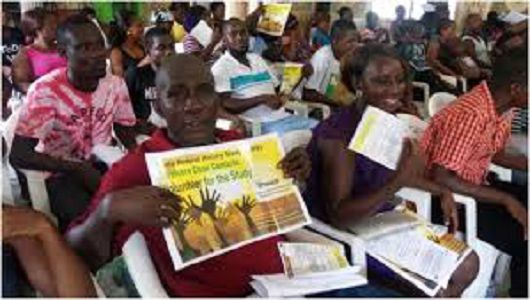
Ensuring optimal participant comprehension of the research trial by developing high-quality information and consent materials was an added retention strategy. Information sessions were conducted for PREVAIL I potential candidates to explain the trial requirements, risks, benefits, and compensation. The trial information was presented by trained Liberians in local dialects, thereby eliminating potential ethnic distrust and reducing misunderstandings. Flipbooks were created with clear illustrations and guidance related to the trial for added visual comprehension. Private informed consent sessions were conducted after the main information sessions to inform participants and allow them to ask additional questions confidentially. "This strategy, coupled with community information sessions by the SMC team, resulted in increased knowledge that participants used to make an informed decision to enter the trial, thus facilitating higher retention."
The trial enrolled a total of 1,500 participants, most of whom were from the 25 communities within NKT, between February 2 and April 30 2015. Focusing on the retention angle, a great deal of emphasis was placed on embracing cultural norms. Participants often reported rumours and perceptions of the community dwellers regarding the trial to follow-up nurses, triage nurses, and medical monitors. Several participants mentioned how they were being stigmatised by some members of the community. Nurses and medical monitors took the opportunity at those times to reinforce messages relayed in the community by the SMC team.
In addition, the PREVAIL I clinical research team developed a participant follow-up system in which 25 Liberians living in the NKT communities were hired as participant trackers. Based on the researchers' conviction that "a strong correlation exists between personal contacts and successful clinical trial outcomes", each trial participant was assigned to one participant tracker. It is believed that participants were more willing to share medical issues during a home visit by a community member. The trackers worked in communities in which they live and thus were familiar with the local culture and population. Their primary role was to follow up with the participants in their community to ensure that medical issues like vaccination reactions were reported, to remind them of their next clinic visit, and to survey for potential adverse social or community perceptions regarding the trial. The trackers obtained information initially by means of oral conversation; a form was later developed to aid in data collection.
The PREVAIL I clinical research team achieved an overall follow-up visit rate of 97.8% through 12 months. The design for PREVAIL I assumed a loss to follow-up rate of 1% per month, meaning that the research team would have expected to have lost approximately 160 of the 1,500 participants. The PREVAIL I follow-up exceeded this by approximately 120 participants.
"The trial data collected illustrate an extremely high participant retention rate, particularly for this research-naïve setting, that facilitated the optimized capture of trial results, including adverse events. The increased ability to respond to social concerns of participants - such as stigma, job retention and relationship conflicts - was an additional significant benefit of this intensive follow-up methodology. This analysis underscores the criticality of community involvement in clinical research efforts."
Contemporary Clinical Trials Commununications. 2018 Sep; 11: 50–54. doi: 10.1016/j.conctc.2018.06.004. Image credit: Liberian Daily Observer
- Log in to post comments