










































Implementing a Multisite Clinical Trial in the Midst of an Ebola Outbreak: Lessons Learned From the Sierra Leone Trial to Introduce a Vaccine Against Ebola
Centers for Disease Control and Prevention, or CDC (Carter, Widdowson, Schrag, Legardy-Williams, Estivariz, Callis, Carr, Fischer, Hadler, Greby, McDonald, Gee, Bresee, Cohn, Hersey, Schuchat, Seward); University of Sierra Leone (Idriss, Samai, Webber, Sahr, Thompson, Edem-Hotah, Momoh, Kallon); Ministry of Health and Sanitation, Freetown, Sierra Leone (Samai); E-Health Africa (Spencer-Walters); Conceptual Mindworks, Inc. (Gibson)
"Conducting a successful trial that vaccinated almost 8000 high-risk healthcare workers under a rigorous investigational new drug protocol in the midst of an Ebola epidemic, and in coordination with the national Ebola response, was a challenging but ultimately successful experience."
Sponsored by the US Centers for Disease Control and Prevention (CDC), the Sierra Leone Trial to Introduce a Vaccine against Ebola (STRIVE) began enrollment in April 2015 in partnership with the College of Medicine and Allied Health Sciences of the University of Sierra Leone (COMAHS) and the Sierra Leone Ministry of Health and Sanitation (MOHS). This paper describes the implementation challenges encountered, strategies used, and lessons learned related to infrastructure, staffing, participant communication, and technology integration during the planning (October 2014-March 2015), enrollment (April-August 2015), and follow-up (April 2015-November 2016) stages of the trial.
STRIVE was a randomised, unblinded phase 2/3 trial with no placebo that was designed to evaluate the safety and efficacy of the investigational Ebola virus vaccine, rVSV∆G-ZEBOV GP (Merck and Company, Inc). Before the trial launched, the staff initiated communication efforts with the main objectives of recruiting participants, supporting human subjects' protection, and building trust in the community. Ongoing formative activities with the general public, public health leaders, and healthcare workers to identify their knowledge, attitudes, and beliefs about Ebola vaccines and the vaccine trial allowed organisers to adapt study messages and materials in response to newly identified issues. Trial staff coordinated with the National Ebola Response Committee Social Mobilization Pillar so that STRIVE messages were aligned with the overall Ebola response. Specific communication and community engagement activities included:
- Parliamentary briefings, high-level government meetings, community stakeholder and international partner meetings, and health facility leadership briefings to update partners, stakeholders, and the community on STRIVE activities;
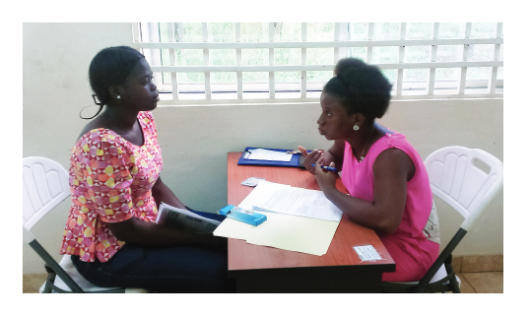
- More than 175 sensitisation and information sessions for potential study participants at hospitals, community health centres, Ebola Treatment Units, and Ebola Holding Centers;
- Informational materials that were designed to maximise understanding of the trial procedures and risks and benefits among participants with widely varied educational backgrounds; and
- A 24-hour study hotline for enrolled participants who had any further questions.
Enrolled participants (mostly healthcare workers), numbering in the thousands and spread over 5 districts, were randomised to either immediate (within 7 days) or deferred (18-24 weeks after enrollment) vaccination and followed for 6 months after vaccination to monitor for serious adverse events and Ebola virus disease. The operational challenges of safety follow-up were addressed by issuing mobile phones to participants, conducting home visits if participants were unreachable by telephone, establishing a nurse triage hotline, and providing access to free medical care. Also, the main coordination, follow-up, and training centre in Freetown (COMAHS Coordinating Center [CCC]) and 2 participant follow-up centres in the districts distant from Freetown were open throughout the study; handheld tablets and portable printers with backup solar batteries were among the technologies used at the centres. However, internet access was often slow, and connectivity was unreliable, which led to the decision to use paper forms rather than real-time electronic data capture onsite.
Among the approaches to staffing and capacity building described in the paper was the pairing of CDC long-term international residential staff with a local counterpart in order to provide continuity of functions and long-term mentorship and partnership. This approach helped strengthen the technical skills of Sierra Leone's staff while enhancing the United States (US) team's understanding of local context. Together, the pairs introduced weekly action-oriented staff meetings and training in providing positive feedback to local staff. One year after the trial, staff reported they have applied management strategies such as action-oriented staff meetings and other lessons in professionalism and effective communication to new workplaces.
Table 2 in the paper depicts challenges, solutions, and lessons learned during STRIVE. For example, in the area of community relations, there was need for ongoing communications - e.g., in-person meetings - with community and religious leaders to provide trial updates, address misconceptions, and control rumours. "Engaging and periodically updating key leaders throughout the planning and implementation stages of a trial is vital to its success."
Going forward, "The strengthened infrastructure and cadre of trained staff has left Sierra Leone better equipped to conduct future clinical trials. Demonstrating the feasibility of enrolling healthcare workers in a vaccine trial using strategies to minimize absenteeism and impact on clinical services will help inform policies and procedures for prophylactic or outbreak-related vaccination of healthcare workers."
The Journal of Infectious Diseases, Volume 217, Issue suppl_1, 15 June 2018, Pages S16-S23, https://doi.org/10.1093/infdis/jix657
- Log in to post comments