










































Qualitative Evaluation of Breakthrough ACTION/Nigeria's Community Capacity Strengthening Approach to Sustaining Integrated Social and Behavior Change Programming: Phase I
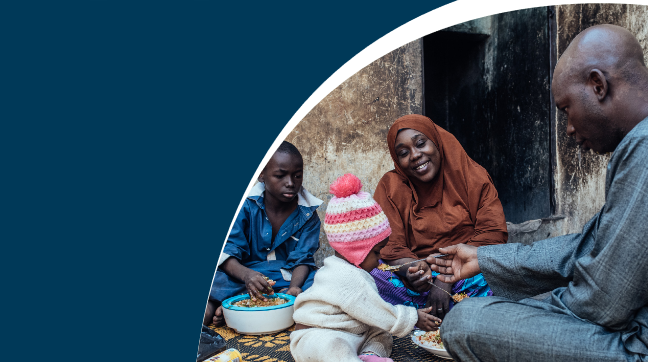
Tulane University (Silva); Population Council (Jani, Adetunji, Adediran)
"We know that right language and tone to use for every community in order to get them enlightened on family planning and other health related issues." - male village development committee (VDC) member, Bauchi
Local governance structures in Nigeria such as ward development committees (WDCs) and village development committees (VDCs) can be effective mechanisms to ensure local leadership, legitimacy, participation, and governance. However, these committees require continued training and investment. Breakthrough ACTION/Nigeria is implementing a community capacity strengthening (CCS) approach (2018-2025) that focuses on engaging WDCs to increase community self-efficacy, to coordinate and support the health ecosystem in general, and to ensure sustained community-level activities supporting social and behaviour change (SBC) and positive social norms for improved health outcomes. This report presents results from a study led by Breakthrough RESEARCH, funded by the United States Agency for International Development (USAID), that assessed early success, threats, and opportunities for Breakthrough ACTION/Nigeria's CCS Phase 1 approach.
Breakthrough ACTION Nigeria's SBC programme leverages religious, traditional, and community opinion leaders to influence community norms and household behaviours to improve family planning (FP) behaviours, malaria prevention and treatment, and maternal, neonatal, and child health and nutrition (MNCH+N). Breakthrough ACTION programming also addresses 5 priority social and gender norms as gateway factors that contribute to behaviour change, as follows: (i) limited mobility and social interaction, (ii) unequal agency on health decision-making, (iii) acceptance of early marriage/childbearing, (iv) traditional nutritional practices and restrictions, and (v) belief in the effectiveness of traditional remedies for MNCH problems.
During the first stage of intensive programme implementation lasting approximately 24 months, the community SBC approach in integrated programming states (Sokoto, Kebbi, and Bauchi) ensured that most women, their families, and community members were reached by home visits or compound meetings and received SBC messages across health areas based on the life stage approach. Community dialogues also focused on family and male involvement in support of priority health areas. In addition, beneficiaries were referred to facilities for counseling or service uptake, using referral cards. Finally, beneficiaries were reached through mobile, digital, or mass media activities.
To ensure the maintenance and sustainability of community SBC, Breakthrough ACTION/Nigeria's CCS approach assists WDCs to take a leadership role in: (i) helping communities identify priority health areas and behaviours in the areas of FP, malaria, and MNCH+N and to demand appropriate and quality health services; (ii) empowering communities to mobilise resources, enhance participation in health services, and address underlying barriers to improved health, including gender biases and norms; and (iii) increasing community ownership and sustainability by developing systems to ensure continued community involvement and participation.
In this first stage, Breakthrough ACTION/Nigeria's support focused on "quick wins" to build self-efficacy and trust for the WDC in the community. Thus, they supported WDCs to address barriers to uptake of some MNCH+N services (e.g., building infrastructure and providing commodities and emergency transportation). Approximately two years after training and implementation of stage 1, the 73 WDCs progressed to the second stage, support maintenance, during which Breakthrough ACTION/Nigeria is providing additional capacity strengthening and training opportunities tailored to the community's needs as identified by an analysis of capacity gaps.
The study used a qualitative design and was conducted in the third quarter of 2021 in two out of the three integrated SBC implementation states of Nigeria: Bauchi and Sokoto. Methods included: 14 in-depth interviews with WDC members, 15 with VDC members, 10 with community volunteers (CVs), 2 with traditional leaders, and 8 with LGA officials; 10 key informant interviews with Breakthrough ACTION/Nigeria staff; and 32 focus group discussions with male and female beneficiaries.
Key findings:
- There was an increased awareness and knowledge of health issues across all target health areas, including FP, child health, malaria, immunisation, antenatal care (ANC), and nutrition. Programme beneficiaries report that this increase in knowledge has led to the adoption of healthier behaviours.
- Breakthrough RESEARCH finds heavy emphasis on knowledge or awareness as determining factors for sustainability of both WDCs' ownership over the ecosystem that supports community health and community-level behaviour change.
- Programme beneficiaries perceive that Breakthrough ACTION/Nigeria's SBC sensitisation messages have led to informed decision-making and healthier choices, such as abandoning harmful traditional nutritional practices like feeding water to newborn babies.
- Programme beneficiaries report that SBC messages have led to more participation of men in healthcare services uptake when taking women for services such as ANC and in increased joint-decision-making between couples regarding health service use. However, in line with cultural norms, many believed that the husband should be responsible for deciding what health behaviours his family members would and would not adopt.
- All participant groups expressed some degree of difficulty in convincing community members about the importance of certain health issues and challenging accepted religious and cultural norms that act as barriers to healthier behaviours. Shifting social norms in support of these health behaviours, such as those related to birth spacing, offers an opportunity for sustained behaviour change.
- Although many WDCs are meeting the national quota for female representation, there are very few female WDC members in leadership roles. Meanwhile, there is a need for additional women to take on sensitisation efforts given cultural norms and preferences that preclude male volunteers from educating or liaising with married women, particularly during house visits. Relatedly, insufficient female health personnel in health facilities, as well as limited availability of health personnel on weekends, could limit the advances that the CCS approach is making and make them harder to sustain.
- WDC members are not exempt from norms about gender roles that may limit the success of the CCS strategy, as some male members perceive that issues such as nutrition are not for men. However, social norms may be slowly shifting as communities begin to accept and follow community health sensitisation messaging. Incentives in health facilities such as newborn care packages are one of the tools funded by WDCs to encourage behavioural uptake and reach a critical mass that creates a normative shift.
- WDCs, VDCs, and CVs have a strong sense of self-reliance and project a high level of capacity to effect positive changes in health behaviour and health infrastructure, yet the resource mobilisation strategies WDCs have used so far are mostly limited to fundraising within their own membership or other prominent community members, which may not be sustainable.
- Another threat to sustainability raised by different categories of respondents concerns service delivery and the possibility that supply may not match the increasing service demand at facilities.
- Stakeholders have confidence in WDCs' likelihood to be able to sustain community- level SBC and health achievements to date. They describe most WDC members as highly motivated as as being known and respected members of the community, which facilitates CVs' work.
- Transparency and trust established thus far present an opportunity for sustaining community SBC gains achieved to date, yet the anticipated removal of supportive supervision provided by Breakthrough ACTION/Nigeria was raised as a potential threat to sustainability.
Recommendations include:
- Strengthen capacity for addressing a wider range of behaviour influences sustaining change, including practicing holding government and other stakeholders accountable to their commitments to support community health and advocacy.
- Reinforce the use of community data collection to monitor barriers to uptake of target behaviours to practice programmatic course correction.
- Intensify involvement of religious leaders and influential community leaders, such as district heads, to support community structures in reinforcing Breakthrough ACTION/Nigeria's SBC messaging.
- Provide additional reinforcement to WDCs to support both male and female CVs to convince male household heads/husbands of the benefits of using ANC and FP services for their wives.
- Further promote female participation in WDC and community structure leadership, and increase the number of female outreach workers and female healthcare workers at local facilities.
- Support further clarification of roles and responsibilities, primarily between WDC, VDC members, and CVs.
- Provide refresher trainings for WDCs, VDCs, and CVs on both health content areas and interpersonal communication, and reinforce WDCs' capacity for non-coercive leadership and communication
- Facilitate greater support and collaboration from WDCs and VDCs in conducting house-to-house visits and conducting community dialogue sessions with traditional and influential community leaders.
- Ask WDC members and CVs to have patience when conducting home visits, as some concepts may not be readily understood or accepted by certain communities.
- Support the diversification of WDCs' and VDCs' fund generation strategies.
Breakthrough RESEARCH proposes a second phase of evaluation of the CCS approach to advance understanding of the conditions under which the Phase 1 programming may be sustained and to assess how Breakthrough ACTION/Nigeria adapted their programming and sustainability plans in response to the findings shared here. Such a study could, for example, clarify what inputs at higher levels of the health system are needed in Phase 2 to ensure support for sustained community engagement and ownership of community health.
Breakthrough ACTION + RESEARCH Twitter post, October 3 2022. Image credit: KC Nwakalor for USAID/Digital Development Communications
- Log in to post comments