










































Capacity Strengthening: HC3 Strengthens the Social and Behavior Change Communication Capacity of the Nigerian National Malaria Elimination Programme
“To achieve high quality and effective malaria SBCC interventions, it is critical to have competent and coordinated SBCC systems in place. This competency increases the quality and effectiveness of SBCC interventions, while coordination reduces duplication of efforts and increases the consistency of messages between implementing partners who may be funded by different donors.”
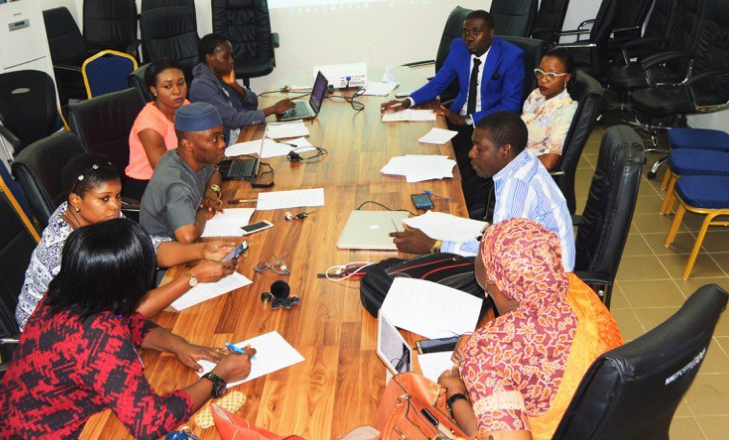
This case study highlights the Health Communication Capacity Collaborative (HC3)’s efforts in Nigeria, starting in 2014, to strengthen the capacity of the Nigerian National Malaria Elimination Programme (NMEP) social and behaviour change communication systems and processes. Specifically, the work of HC3 was designed to help the Advocacy, Communication and Social Mobilization (ACSM) branch of the NMEP provide effective leadership in coordinating the social and behaviour change communication (SBCC) activities of the malaria response in Nigeria.
The work of HC3 is based on a model they developed called the SBCC Capacity Ecosystem™, which reflects the systematic assessment, design, and implementation of customised and strategic capacity strengthening for SBCC. This case study forms part of a series of case studies describing its SBCC capacity strengthening efforts, with each case study illustrating a different aspect of SBCC capacity strengthening at varying levels as outlined in the Capacity Strengthening Ecosystem™ (See Related Summaries below for other case studies in this series). As explained in the document, “The Ecosystem provides a structure with which a practitioner can assess SBCC capacity at the individual, organizational and system levels. The model recognizes that capacity strengthening is a dynamic, non-linear process that involves many interacting agents, and speaks to the inherently complex and often unpredictable nature of capacity strengthening and the ever-changing environments in which we work. It also recognizes that a single intervention is almost never enough to make change. The elements of the Ecosystem are necessarily mutually reinforcing.”
In this case study, “[T]he Ecosystem model helps articulate how capacity strengthening support was provided to the coordinating systems, organizational levels and individuals within the NMEP’s ACSM unit and ACSM subcommittee/technical working groups, which, in turn, worked with the state malaria elimination programs. HC3’s role in Nigeria was to build the skills of the state program staff to analyze, develop, plan, implement and monitor high-quality evidence-based malaria strategic plans and activities for SBCC.” To acheive this, the programme used the following four approaches:
Approach 1: Supporting NMEP and Partners through Participatory Process Results in Review and Update of National ACSM Framework - The National ACSM Framework which was reviewed and updated guides the planning, implementation, and evaluation of all malaria SBCC programmes in Nigeria. Developing a high-quality national strategic framework around communication is considered the fundamental first step in system-level coordination, as it provides the ACSM with a road map to guide their coordinating functions.
Approach 2: Investment in Building an ACSM-Owned Structure and System to Ensure Quality and Minimize Duplication of Malaria SBCC Materials - This involved the creation of content design teams (CDTs) to facilitate the standardisation process for malaria communication materials and products among malaria ACSM partners across the country, and the creation of national centrepiece materials. As a result, partners no longer develop and produce malaria communication materials without first going through the technical review process managed by one of the material-specific CDTs. This helps keep malaria messages consistent and reduces duplication.
Approach 3: Strengthening SBCC Capacity of Partners and Critical Stakeholders within the Malaria Response - Considering capacity strengthening as a dynamic and complex process involving many interacting agents, HC3 Nigeria recognised the need to also strengthen the capacity of partners and critical stakeholders within the malaria response. Many ACSM partners who are part of the SBCC system received skills training, which also lead to a stronger ACSM partnership.
Approach 4: Proactively Engaging the Media - As another way of enhancing organisational capacity, HC3 Nigeria supported the NMEP to foster relationships and build goodwill with the news media with the aim of gaining media support for the malaria response. These efforts included helping the NMEP develop a robust media engagement strategy and conduct media literacy training for the heads of branches and technical leads of the NMEP and ACSM partners. HC3 also developed a standardised news media toolkit and guidelines for media engagement to facilitate effective media relations.
The case study also outlines some of the challenges. Some of them were due to the fact that most of the staff for ACSM were new, having been transferred from elsewhere. In addition, HC3 Nigeria began working with the Nigerian government when the Malaria National Strategic Framework had to be updated. One of the greatest challenges was getting all partners to understand the importance of the document and the need to review and update it on an ongoing basis.
In terms of lessons learned, this experience shows that, “in an environment of limited resources and a significant health challenge like malaria, it is essential to have systems and guidelines in place for smooth coordination and effective checks and balances to ensure quality communication materials are produced”. In addition, “long-term investment in building structures and resources can result in sustainable impact when done in a collaborative manner with a focus on impact and supporting local objectives and priorities, including donor investments.”
HC3 website on January 17 2017.
- Log in to post comments