










































Mass Media and Reproductive Behaviour: Serial Narratives, Soap Operas and Telenovelas
St. John's College, Oxford, and Vienna Institute of Demography
"...mass media plays important roles - both explicitly and implicitly - in terms of conveying information, stimulating thought and discussion, and in forming and developing ideational behaviour."
With an emphasis on the developing world, this working paper presents a literature review of the different ways in which mass media has affected - or has been reported to affect - certain aspects of health and demography. These media outlets range from explicit, government/non-governmental (NGO)-funded health interventions, through to the implication of the benefits of small family size in Brazilian soap operas, or telenovelas. The paper is a presentation of research findings, coupled with suggestions for further analysis in the area of communicating demographic and social information with the wider public.
As examples included in the paper show, it has been well documented that some mass media interventions have been successful in changing and nurturing both public health activities and social and cultural norms. In Nigeria, for example, a campaign using music videos produced by popular national artists promoting family planning implemented in 1989-90 was found, after cross-sectional analysis, to have had a significant effect on contraceptive use and intention as well as lowering desired family size.
The next section explores the use of soap operas to promote healthy behaviours. South Africa's Soul City is one such soap opera mentioned here. Also, Acompañame (Accompany Me) was a 9-month telenovela promoting family planning. It was broadcast primetime, weekdays during 1977-78 in Mexico. Research in 1981 found that: (i) phone calls to Mexico's national family planning office requesting family planning information increased from zero to an average of 500 a month. Many people calling mentioned that they were encouraged to do so by Acompañame. (ii) More than 2,000 women registered as voluntary workers in the National Program of Family Planning. This was an idea suggested in Acompañame. (iii) Contraceptive sales increased 23% in one year, compared to a 7% increase the preceding year. (iv) More than 560,000 women enrolled in family planning clinics - an increase of 33% (compared to a 1% decrease the previous year). Several other telenovelas broadcast around the world - and the impact they had on behaviour - are described.
The author stresses that "[i]t is not, of course, particularly wise to make a direct link between the growth of the telenovela with falling fertility rates." However, [n]ovelas have been a powerful medium through which the small family has been idealized" (La Ferrara, Chong et al. 2008).
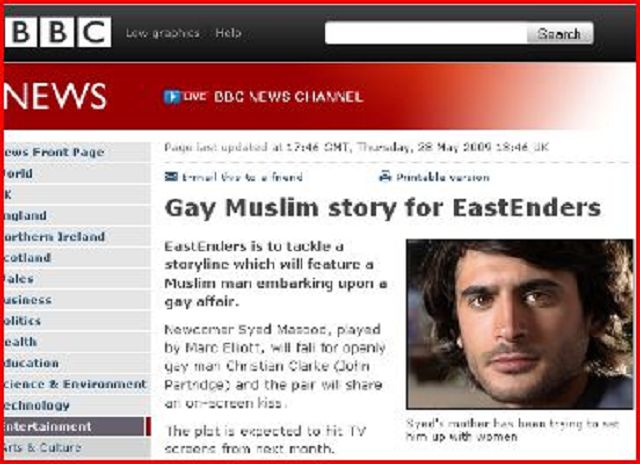
To illustrate the importance of understanding how mass media in the developed world reflects and presents the family in its broadest sense, the author discusses what was then an upcoming story on the BBC soap opera EastEnders concerning a gay Muslim. There was a telephone number after the end sequence for "viewers affected by the issues presented in this programme". According to the author, initial reaction to the storyline demonstrates how discussion had already opened up - even prior to broadcast.
Based on his review of the research highlighted in the paper, the author argues that it is necessary to foster a greater relationship between demography and the television and media industries, in conjunction with areas such as advertising, psychology, and sociology, to gain a greater understanding of the possible interactions between the various presentations of family life on television and views held by young people - especially in the developing world.
The Future of Human Reproduction: Working Paper #7
- Log in to post comments