










































Mass Media: Reaching Audiences Far and Wide with Messages to Support Healthy Reproductive Behaviors
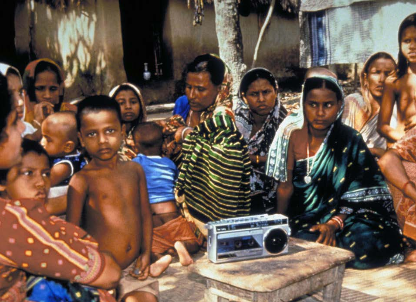
This brief describes the evidence on and experience with mass media programming in family planning, finding such programming can influence individual behaviours by providing accurate information, building self-efficacy, and promoting attitudes and social norms that support healthy reproductive behaviours. Mass media programming is one of several proven high-impact practices in family planning (HIPs) identified by a technical advisory group of international experts, meaning that there is sufficient evidence to recommend widespread implementation as part of a comprehensive family planning strategy, provided that there is monitoring of coverage, quality, and cost, as well as implementation research to strengthen impact.
As detailed in the brief, the distinguishing characteristic of mass media programmes, relative to other social and behaviour change (SBC) interventions, is that they reach a large audience - often national in scope - with consistent, high-quality messages, primarily through TV and radio (e.g., public service announcements or advertisements, talk shows, or serial dramas). Some mass media programmes also use ancillary print materials. (Approaches that rely on digital technologies, such as social media, are not covered in this brief.)
This programming, which should be linked with other SBC approaches (e.g., interpersonal communication or community group engagement) for greater impact, address barriers to access and use of contraceptives. For instance, it can be designed to overcome lack of knowledge about fertility and contraception, correct misperceptions about one's risk for unintended pregnancy, allay concerns about side effects of contraceptive methods, increase self-efficacy or confidence to take action, and/or change perceived norms that discourage family planning and contraceptive use. The theory of change shown in Figure 1 on page 2 of the brief illustrates the potential pathways through which mass media programming may influence key reproductive behaviours (assuming that a significant portion of the intended audience has access to and uses mass media).
The brief summarises results from the strongest evaluation designs that show that mass media programming is high impact. Table 1 on pages 4-5 features 12 studies that found a statistically significant effect of exposure to mass media on modern contraceptive use. (Four other studies (not summarised in the table), also with strong evaluation designs, found effects that were not statistically significant.) Six of the 12 programmes used radio or TV serial dramas, with each drama having 13 to 26 episodes running for 6 months to 2 years and promotional ads on family planning. Six of the evaluations measured exposure specifically to mass media content. The other 5 evaluations measured exposure to mass media combined with other components (e.g., community mobilisation) in one measure.
Implementers of mass media programming, like other SBC approaches, should follow best practices for SBC. In addition, research and programmatic experience have demonstrated that when designing, implementing, and evaluating mass media programming, organisations should prioritise the following:
- Invest in high-quality formative research to support development of focused messaging and to inform channel selection, programme format, and broadcast schedules. Increasingly, many implementers rely on both "traditional" public health research methods, such as focus group discussions and surveys, and more rapid yet immersive methods drawn from marketing, human-centred design, and communication science. Once formative research has been conducted, implementers typically develop a creative brief through interactive workshops, allowing creative professionals to understand the data and translate it into key programme elements.
- Partner with local creative professionals to create culturally specific programming. Evidence suggests that mass media is most effective when it closely parallels the lived reality of intended audiences.
- Consider the nature of priority behaviours when selecting a format. Some evidence suggests that one-time or periodic behaviours (e.g., immunisation, antenatal care) may be more amenable to change via mass media than habitual behaviours (e.g., exercise, dietary habits). Anecdotal evidence suggests that long-format media such as serial drama may offer particular value in addressing complex or interrelated behaviours that are influenced by social norms (such as contraceptive use), as it allows for nuanced exploration of these issues and believable modeling of a character's process of behaviour change.
- Promote audience engagement and interaction. Many implementers have engaged audiences by complementing mass media programming with listeners' groups or call-in segments. With the rise of mobile phones and social media, there are now new opportunities to solicit feedback from audience members and/or encourage discussion of media content among peers.
- Ensure sufficient reach and frequency of exposure among priority audiences. Research clearly demonstrates that repeat exposure to SBC messages is key to programme impact. Implementers must consider what communication channels, radio or TV stations or networks, broadcast schedule, and programme format will best enable them to reach priority audiences.
- Use pretesting, monitoring, and other mechanisms to allow for continued validation, revision, and development of mass media content. Monitoring of mass media should include not only measures of reach among priority audiences but also message recall and intended behaviour change. Tools such as media omnibus surveys, call-ins, listeners' groups, and SMS (short message service, or text message) surveys offer opportunities to gauge audience response to existing programming and inform the development of new content. Across all pretesting and monitoring activities, implementers should ensure that media content does not unintentionally reinforce social inequities or harmful norms.
- When possible, plan for evaluation that measures behavioural outcomes and allows for cost-benefit analysis. Implementers and evaluators may support both replication of specific types of mass media programming and future analysis of the evidence base by ensuring that evaluation reports and other publications include clear and detailed information about the nature of the programme evaluated.
To conclude the brief, links to resources for further learning are provided.
HIPs in Family Planning website, October 17 2017. Image credit: © 1994 Center for Communication Programs, Courtesy of Photoshare
- Log in to post comments