










































Vaccine Hesitancy among Mobile Pastoralists in Chad: A Qualitative Study
Institut de Recherche en Elevage pour le Développement (Abakar); Swiss Tropical and Public Health Institute (Abakar, Lechthaler, Schelling, Zinsstag, Muñoz); University of Basel (Abakar, Lechthaler, Schelling, Zinsstag, Muñoz); Centre de Recherches en Anthropologie et Sciences Humaines, or CRASH (Seli); Bern University of Applied Sciences (Lechthaler, Tran); Alliance for Health Policy and Systems Research (AHPSR), World Health Organization, or WHO (Tran)
"Demand side barriers to vaccination among rural and hard-to-reach populations in Chad are not yet well understood."
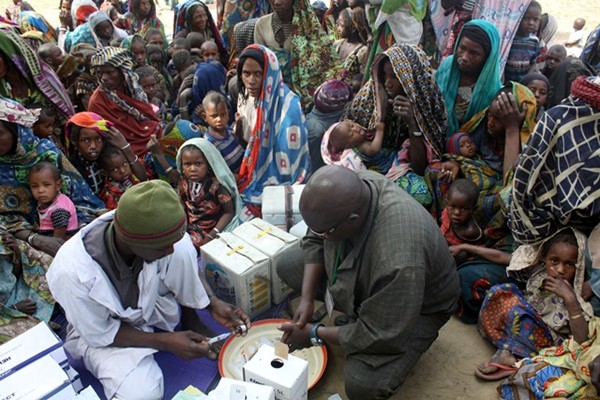
Mobile pastoralists in Chad represent a particular case of inequity in access to vaccination services. For example, a 2015 report found that poliomyelitis vaccination coverage was 11.6% among mobile pastoralist communities and 80% among settled children. This study is grounded in the hypothesis that mobile pastoralists' communities in Chad face specific demand-side barriers to access vaccination services. The idea is that understanding the factors that caregivers in these communities consider in order to decide whether or not to vaccinate a child, in addition to understanding the providers' perspectives, can help tailor vaccination programmes towards increasing vaccination acceptance and uptake.
In a quest to explore underlying issues of vaccination hesitancy among this population, the researchers conducted a qualitative study in a rural health district in Danamadji (in southern Chad) in April 2016 with 12 key informant in-depth interviews and 4 focus group discussions (FGDs) including 35 male and female participants. Participants in the study included caregivers, traditional chiefs, local and religious leaders from mobile pastoralist communities, and health officials and staff. They then carried out a content analysis using a pre-defined set of categories for vaccine hesitancy, covering issues on harmful effects of vaccination, mistrust with vaccination programmes/services, issues with the health system, and other issues.
The groups of demand-side barriers reported most frequently in the FGDs were mistrust of the Expanded Programme on Immunization (EPI) and polio vaccination outreach services (53%, n = 94), followed by health system issues (34%, n = 94) and concerns related to potential harm of vaccines (13%, n = 94). Concerns identified by caregivers, health professionals, and community leaders followed a similar pattern. "Not enough information to make decision" is the most frequent concern, followed by "Health staff being unpleasant/untrained", "Religious reasons", "Concerns that causes diseases/general harm/adverse effects", and "Concerns with time/working hours". None of the health professionals reported concerns about vaccinations being potentially harmful.
Mobile pastoralist communities were usually reached less often with information than other communities, and they did not have regular contact with health facilities or authorities - only making use of health services during illness or in emergencies. In fact, no communication channel was reported that brings pro-vaccination messages to nomadic communities. Some caregivers complained that instead of receiving more information, they were intimidated by health authorities forcing them to vaccinate their children. The way in which polio outreach vaccination days are organised, with teams moving from camp to camp during one day to vaccinate children, was described by participants inadequate to provide sufficient information and convince caregivers to vaccinate their children, specifically for routine immunisation.
Religious and cultural beliefs also played a role in the decision making process of whether to vaccinate infants living in nomadic camps. Some communities believed that diseases are "...a plan of God to train the child for the difficult moments" (Woman, Daranaïm), and they should not fight them. For others, diseases had a religious/divine origin, and they must be handled by traditional healers such as the Marabout. The services provided by traditional healers were considered to be more affordable, despite the fact that vaccination is offered free of charge in Chad. They were also considered more effective as compared with western medicine (including vaccination).
The fact that the messages about vaccination (essentially, polio) or the interventions themselves were not provided by staff who were considered to be peers in terms of religious and cultural background prevented some parents from vaccinating their children. In addition to the language barrier between health professionals and nomadic communities, health workers seemed to ignore the basic cultural and religious norms in the camps, and there were few Muslim health workers.
Reflecting on the findings, the researchers indicate that contrary to expectations, this study found that issues related to the health system itself, such as health staff being unpleasant or vaccination campaigns being poorly organised, were widely reported by nomadic communities. In comparison to previous studies on vaccine hesitancy in low- and middle-income countries (LMICs), it is surprising that nomadic communities did not raise many concerns about vaccines being harmful for children or causing dangerous adverse effects. This mismatch might be explained by the fact that a substantial number of studies used structured questionnaires to quantify the proportion of respondents with a specific concern or its impact on vaccination behaviour. Thus, this study supports the use of qualitative research to improve the design of behaviour change communication campaigns.
In terms of recommendations, the researchers suggest that advocacy could be directed towards exploring new channels of communication with nomadic communities in the Danamadji health district by involving the community more through local social mobilisation teams and maintenance of a permanent contact network - e.g., using mobile phones with camp and group leaders. Importantly, interlocutors between them and the services need to be established, especially considering that illiteracy rates are much higher than among settled communities. It has been previously shown that outreach campaigns combining veterinary and human health services are a promising and feasible strategy for increasing vaccination uptake among mobile communities. These campaigns were also successful because there was and is ongoing investment in appropriate information campaigns based on perceptions of human and animal vaccination. Adapted information material and routine EPI vaccination campaigns using interlocutors for dissemination are ongoing in Danamadji.
In the past, the researchers have had good experience with trans-disciplinary stakeholder meetings between communities, authorities, and health workers. Such meetings are foreseen in this study to feedback the results and plan for information, education, and communication (IEC) training sessions focusing on building empathy and cultural sensitivity among the participating health workers. "Local health systems must plan for the periodic presence of pastoralist communities in their zones of responsibility and create more mutual trust."
International Journal for Equity in Health 2018 17:167. https://doi.org/10.1186/s12939-018-0873-2. Image credit: UNICEF Chad/2012/Andriamasinoro
- Log in to post comments