










































Triggering Handwashing with Soap in CLTS: Insights on What Works from Malawi
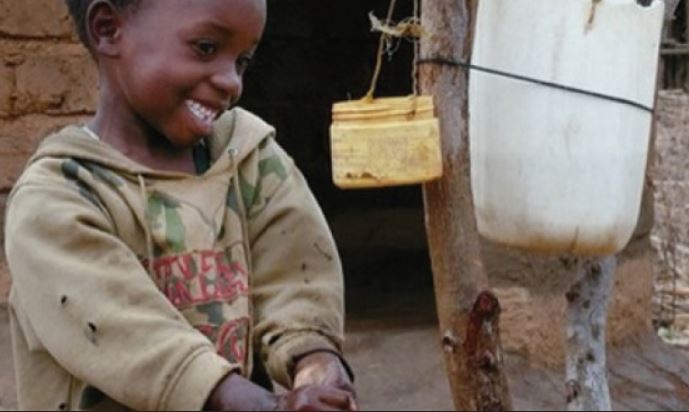
"The pilot resulted in change in three key areas: a new and tested set of tools for triggering for handwashing; significantly more households that had built handwashing facilities by their toilets in comparison to villages triggered with the current tools; and these communities had higher rates of soap found at the handwashing facilities."
This 4-page Field Note discusses using "behaviour triggers" to encourage handwashing as part of Community Led Total Sanitation (CLTS) processes in Malawi. After it was found that there were few tools available to support triggering handwashing behaviours, the United Nations Children’s Fund (UNICEF) led a pilot intervention to use demonstrations and roles plays as tools to encourage handwashing. The brief outlines how the pilot resulted in ten tested tools and improvements in handwashing within the pilot communities.
The project team developed plans for improving handwashing behaviours, including nine new handwashing triggering tools. These tools, plus one existing tool, were piloted in two villages. Baseline measurements were compared with data, semi-structured interviews, and focus group discussion to assess impact. The ten tools centred on communicating three key messages: that there are various sources of hand contamination (including faeces and germs), handwashing with soap is a complete way to remove all contaminants (dirt, smell, and germs), and hands that appear clean can still have dirt on them.
The brief details each tool, which includes using clay or charcoal to demonstrate how faecal matter can be left on the hands if not washed properly, and how soap and water is needed to sufficiently clean hands and items like babies’ nappies. The brief presents the tools ranked by effectiveness (ease of facilitation, ‘reliability’, effectiveness in terms of actual impact, and ability to psychologically trigger community members). In the the highest ranking tool "the community watch a demonstration by a volunteer using anal cleaning materials to try to remove mud [symbolising faecal matter] from a brick with a dent (or a nearby tree with a dent). The community realises that faecal matter is left on their hands after cleansing themselves in the toilet."
According to the brief, the pilot demonstrated that "triggering for handwashing with soap has potential to increase both the rates of handwashing facilities built by households as well as the presence of soap by the handwashing facilities." The following are key lessons learned:
- "Collaboration with experienced facilitators can result in cost-effective and easily scalable innovations in CLTS implementation: in this case, 9 new tools were developed for triggering for handwashing with soap in the CLTS process.
- Integrating a combination of the field-tested handwashing triggering tools into the CLTS process has the potential to increase demand for handwashing and the likelihood of communities building facilities for handwashing with soap.
- Initial results from field-testing the tools showed a greater rate of increase of handwashing facilities built in triggered communities; also soap was more likely to be found by handwashing facilities in these communities (55% vs 15% in non-triggered communities).
- The triggering tools developed can be used either at the CLTS triggering or during a follow-up visit. As follow-ups have been found to be crucial for ODF [Open Defecation Free] success and are often continuously conducted, these visits provide an opportunity for facilitators to further promote handwashing."
This Field Note is part of the UNICEF Eastern and Southern Africa Sanitation and Hygiene Learning Series, designed to improve knowledge of best practice and lessons learnt in sanitation and hygiene programming across the Region. The series has been funded by the Bill & Melinda Gates Foundation in support of improved knowledge management in the sanitation sector
UNICEF website on August 19 2015.
- Log in to post comments