










































Theatre for Change's Tiphunzire! Project: Baseline Study Report
One South
""Gender norms as well as inadequate SRH [sexual and reproductive health] practices significantly affects the livelihoods and life aspirations of girls and women alike. By improving the knowledge of sexual and reproductive health and rights at an early stage, a girl can strengthen their self-esteem and confidence to make the best use of education."
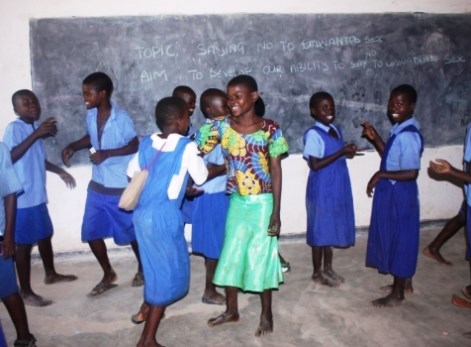
This is the core assumption underpinning the Tiphunzire! (Let's Learn!) Project in Malawi, which centres on creating empowering learning environments for marginalised girls. This 56-page baseline report discusses the pre-implementation scenario of Phase 2 of the intervention and offers observations and recommendations around obstacles and opportunities to improving early grade literacy, numeracy, and life skills of marginalised girls. As part of the project, over 350 young female teachers are being trained to be 'Agents of Change' (AoC) to deliver girl-friendly education in 225 schools across 10 districts in Malawi, including establishing after-school girls' clubs and engaging with parents, the community, and other teachers. (see Related Summary below for more information on the project.)
The Tiphunzire Project is being implemented by Theatre for a Change (TfaC) with funding from the United Kingdom Department for International Development (DFID) Girls Education Challenge (GEC) Fund. The project was implemented in two phases. During Phase 1, AoCs were deployed in 36 schools across 6 districts. During Phase 2, the project was scaled up, and AoCs were deployed in 189 schools across 10 districts. The baseline took place with 60 treatment schools and 30 control schools across 10 districts. Along with providing a better understanding of the project's operating context, the baseline sought to ensure that the selection of participant and non-participant schools fulfils the necessary criteria for establishing a robust foundation to analyse project impact.
Overall, across all key measures, the baseline results found the populations of both treatment and control schools to be equally matched and comparable at baseline level, and thus ideal for comparative purpose. It was found that on average, a girl attends 86% of school days, meaning that of the average 21 days of school in the month, a girl will miss an average of 3 days. Reasons for missing school can include child work (75% of the total sample is involved in some form of child work, whether economic or non-economic), and menstruation (37% reported to having trouble attending school during menstruation). In line with the assumptions of the theory of change, the study also found that girls who attended school more frequently scored higher on the literacy subtest of oral reading fluency.
Self-esteem and efficacy are expected to increase among the girls who participate in the Tiphunzire activities. It was found that in the current context, the relationship that a girl has with the male and female parental figures in the household, and in particular the role of the father, matters significantly for her self-esteem. This suggests the need to continually engage with parents and the wider community about girls and their education. Another finding was that while some out-of-school girls perceive that they are able to succeed in school, they may have other self-esteem issues. For example, many out-of-school girls are demotivated to join a younger group of students, as they need to return to the standard level at which drop-out occurred. As well, more than a third of in-school girls who have started their periods reported facing difficulties with attending school during menstruation (37%). A number of reasons were given, ranging from infrastructure barriers, to social, personal, and traditional barriers.
The baseline also explored issues around SRH and family planning. The study estimated that 88% of sexually active girls have an unmet need of family planning, and 21% feel that they are not able to deny their partner sex when asked. It was found that self-esteem significantly affects a number of SRH behaviours, including condom usage and attitudes towards contraceptives. Girls who indicated that a condom had been used at their last sexual encounter scored higher on self-esteem than girls who indicated this had not been the case. Higher self-esteem relates to better SRH knowledge. Girls who indicated that they were aware of methods that exist to prevent pregnancy possessed higher self-esteem than girls who indicated not to know. "These findings strongly support the assumption that higher self-esteem underpins healthier sexual and reproductive health practices."
These and other findings outlined in the report informed a number of project-level recommendations to improve the implementation of the Tiphunzire! project:
- "Strengthen AoC training on Community Outreach & Mobilization and re-visit this in the upcoming refresher training. Training should enable AoCÕs to be comfortable with communicating project aims in an accurate and transparent manner to school stakeholders.
- Engage parents and guardians. This is important because parents ultimately decide if girl attends school or not and a high proportion of girls who participate in TfaC activities will actively support their guardians in housework outside of school hours.
- Actively support non-readers to promote their full participation in project activities.
- Appoint and empower one AoC at the District Level to better coordinate AoCs in the district and represent TfaC in the absence of the School Health and Nutrition (SHN) Coordinator or the Project Team.
- Strengthen existing committee structures that incorporate fathers' involvement in school. The Baseline report found that the relationship that the girl has with the male and female parental figures in the household (in particular the role of the father) matters significantly for her self-esteem. High paternal school involvement positively affects girls' self-esteem.
- Address behavioral challenges and sensitize boys to sexual rights of girls through boys clubs. TfaC offers a number of boys clubs but these reportedly have low attendance. In order for girls to feel safe and capable of succeeding in school, boys need to be actively engaged and sensitized to issues surrounding a girls' right to education. The report found a number of instances of sexual abuse and bullying on the part of boys towards girl learners.
- Communicate the need and importance of a Child Protection Policy and support schools to develop appropriate and transparent reporting mechanisms to ensure safe learning environments for learners. School stakeholders should be informed about cases of abuse found in this study in order to promote the establishment of accessible child protection mechanisms. "
Click here to download the full report.
Theatre for a Change website on June 24 2016.
- Log in to post comments