










































Strengthening Media, Civil Society Organizations and Citizens Role in Forest Resource Governance in Uganda
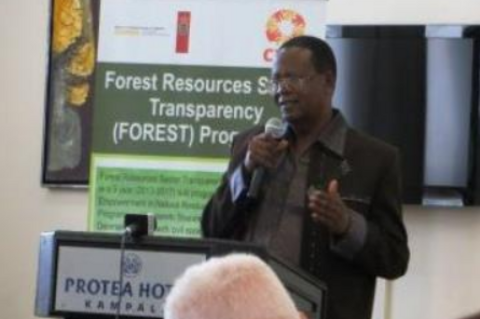
Running from 2013 to 2016, the Strengthening Media, Civil Society Organizations, and Citizens Role in Forest Resource Governance project is working to enhance media coverage of the forest sector and the media's capacity to effectively report, analyse, inform, and engage citizens in Uganda to debate and dialogue on key sector issues. Panos East Africa (PEA) is working with selected civil society organisations, the media, and forest communities within the Albertine region to promote debate and dialogue on key forest sector issues, build capacity of the media to profile these issues, and provide platforms to forest communities to engage and influence decisions within the Forestry sector.
The project is designed to increase the availability of information on the forestry sector by working with research and other organisations to generate quality information that can be used to empower citizens to meaningfully participate and influence key policy decisions in the management of the country's forestry resources. PEA believes that without adequate, quality, and timely information on the forestry sector, citizens and civil society cannot meaningfully influence policy.
The project's strategies include the following.
- Civil society strengthening: PEA will establish a partnership with six selected civil society organisations and twelve media houses, and will work towards building their capacity to work together and separately to address the questions/issues around forestry governance.
- Use of media for citizen and power holders' engagement: PEA will work with and support ten radio stations and two newspapers including those it has not worked with before, to create platforms to support citizen’s voice and participation in demanding accountability and better forest resource management.
- National level engagement: PEA will place journalists in parliament to monitor and cover discussions by the Natural Resources sub-committee of parliament and periodically through a journalists or media forum as they share their experiences.
Given that issues to be dealt with are highly sensitive, PEA says that coverage of key issues surrounding this sector requires excellent investigative skills on the part of the media which calls for skills development, exposure, access to quality resource materials, and strong civil society or social movements to act as a buffer and protect spaces for media and citizens. PEA is working to create direct links between the media and existing civil society networks on forestry governance to increase access to quality and well researched information on the sector but also create, strengthen, and protect spaces for citizens to debate and raise key concerns on the management of the forestry sector.
Environment, Natural resource
This Panos-led media component is part of the five-year Forest Resources Sector Transparency (FOREST) Programme, funded by Danish International Development Agency (DANIDA) through Care Denmark, intended to address, among other issues, loopholes in implementation and funding of policies, laws and regulations in the forestry sector, insufficient representation of poor and vulnerable communities dependent on forests in decision making structures on forestry management, and gaps in civil society's effectiveness in improving forestry governance.
Panos East Africa, Danish International Development Agency (DANIDA), Care Denmark
Panos East Africa website on September 5 2013.
- Log in to post comments