










































Small Doable Actions: A Feasible Approach to Behavior Change
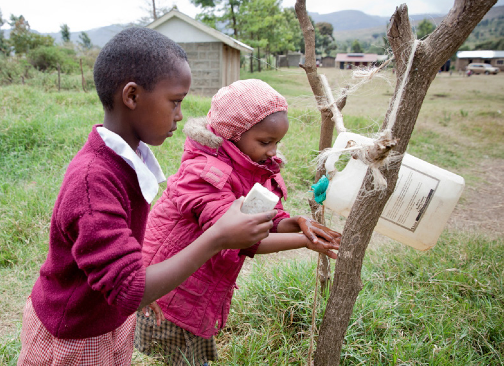
“The overarching WASHplus behavior change approach is built around the notion that people rarely go from current practice to ideal practice at once…”
This learning brief describes the small doable action approach (SDA) which WASHplus has developed to change water, sanitation and hygiene (WASH)-related practises at household level. The United States Agency for International Development (USAID)-funded WASHplus project aims to improve the supply and quality of water and sanitation facilities and hygiene practices, and reduce household air pollution. This involves facilitating better access to hardware and services while focusing on approaches to improve WASH-related practices and behaviours. Led by FHI 360 in partnership with CARE and Winrock International, the project is working in Bangladesh, Benin, Kenya, Madagascar, Mali, Uganda, and Zambia.
As explained in the brief, the WASHplus behaviour change approach is “built around the notion that people rarely go from current practice to ideal practice at once, for example, from a sedentary lifestyle to five aerobic exercise sessions a week, or from open defecation to consistent use of a flush toilet connected to a septic system.” For that reason, rather than promoting the ideal WASH practices (e.g., build and use a flush toilet or insist that all family members wash hands at all five critical junctions using running water and soap), WASHplus constructs a continuum of behaviours that span from unacceptable to ideal. Small doable actions “are behaviors that are deemed feasible to perform in resource-constrained settings, from the householder point of view, and effective at personal and public health levels. Behaviors that meet these two criteria — feasible and effective — are considered small doable actions and are included in the menu of options for WASH behavioral improvement.” WASHplus has worked with partners to develop country-specific SDAs for a range of WASH practices, including how to make water safe to drink, safe disposal of faeces, handwashing at critical times, water source protection and access, food hygiene, and menstrual hygiene management.
The brief describes the process of identifying or negotiating SDAs, which involves a community agent such as an outreach worker “assessing current practice, validating the householder’s current good practice, identifying one or a few WASH behaviors for improvement, and actively problem solving to overcome barriers or resistance to make the selected SDA easier to do. The negotiation ends with a commitment to try the improved practice(s), and requires follow-up (perhaps with another round of negotiation and/or commitment to the current or an advanced SDA) to ensure sustained WASH practice.” The process of negotiation requires a simple assessment of the primary barriers and facilitators of the SDAs, and the brief offers a list of questions that can help community agents identify these barriers and facilitators.
SDA are not only used to improve WASH, but can also be used to improve infrastructure (hardware). This involves encouraging local governments, communities, and households to undertake small doable improvements in water and sanitation infrastructure that will further enhance WASH practice as they work toward more significant infrastructure improvements.
SDA can also be used in an organisational context. Similar to individual behaviour change, developing SDAs in an organisational context requires looking at what exists, what is the ideal, and identifying intermediate steps that are feasible and effective to move toward the goal. For example, when it is impossible to schedule a five-day WASH behaviour change training with government outreach workers, an option would be to devise module training sessions that can be incorporated into ongoing or existing trainings.
The brief offers a brief outline of the uptake of this approach, explaining how in all countries where the approach has been applied, it has brought on board stakeholders and has quickly spread. In Kenya and Uganda, the Ministry of Health and non governmental organisation (NGO) partners “have wholeheartedly embraced the concept and are now integrating WASH SDAs into HIV/AIDS programs with their own resources.” It is also being used in Mali to integrate WASH and nutrition, and in Zambia for a WASH school-based programme.
Looking ahead, WASHplus is exploring how to develop SDAs in other areas of WASH and household air pollution. For example, WASHplus is developing a new set of SDAs related to safe disposal of infant feaces by age cohort in Bangladesh that will be adapted for global use. And through participation in the Clean, Fed and Nurtured community of practice, WASHplus and partners are developing a set of Essential WASH Actions by age cohort that can complement the United Nations Children’s Fund (UNICEF)/World Health Organization (WHO) nutrition and early childhood development essential actions.
There are also plans to evaluate the approach. The brief points out that “program evaluations will document changes in WASH practice, but will not compare the approach or measure sustainability of SDAs, or movement from less to more ideal practices through the SDA approach.”
WASHplus website on September 19 2016.
- Log in to post comments