










































Safety Guide for Journalists
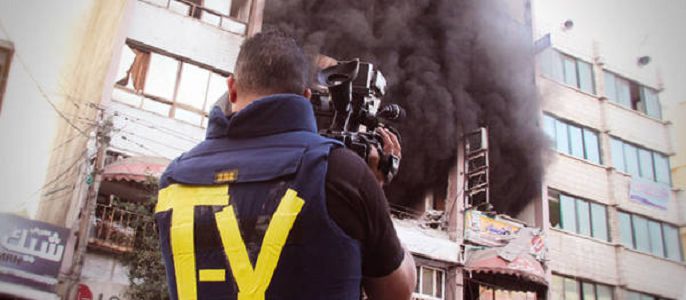
"Journalists and news organizations are essential actors for the exercise of freedom of expression, making them targets for those who want to impose tight control on public debate and citizens' right to information."
From Reporters sans Frontières (FSF)/Reporters without Borders and the United Nations Educational, Scientific and Cultural Organization (UNESCO), this guide offers "essential information and practical advice" for journalists to assist them before, during, and after assignments in dangerous areas. The guide is meant to be useful for all those who work in news and information and who report from hostile environments, such as conflict zones, violent demonstrations, riots, and terrorist attacks. This publication comes in a context of developing threats against media professionals, with more than 700 journalists killed in the past decade for reporting the news. In 2015, more than 105 journalists were killed, while many more were threatened, imprisoned, or kidnapped for doing their work of bringing news and informing to the public.
The first edition of the Safety Guide for Journalists was produced in 1992. This new version, available in Arabic, English, French, the Myanmar language, and Spanish, includes added chapters that highlight the issue of digital safety, a growing worry for journalists, and elaborate on safety precautions for those covering natural disasters or epidemics. They also address the problem of sexual violence, geared particularly afor female journalists. Also, in light of the murders in 2014 of United States (US) journalists James Foley and Steven Sotloff, who were freelancing in Syria, some 60 news outlets and journalists' protection organisations - including RSF - met in New York, US in February 2015 to draw up an employers' code of conduct designed to protect freelance journalists on dangerous assignments. Chapter 5 gives details of this international effort and some examples of action taken by several news organisations to improve journalists' safety.
The guide has been distributed on every continent. For example, upon its translation into the Myanmar language, UNESCO distributed copies to local journalists associations and organisations, media training institutions, the Myanmar News Media Council, and ethnic media organisations.
English, Arabic, French, Myanmar language, Spanish
144 (English), 144 (Arabic), 147 (French), 133 (Myanmar Language), 135 (Spanish)
"Reporters Without Borders and UNESCO launch new edition of safety guide for journalists in high-risk environments" and "Safety guide for journalists: A handbook for reporters in high-risk environments (Myanmar Language)" - both accessed on August 2 2016. Image credit: © Doha Centre for Media Freedom
- Log in to post comments