










































Rural Radio Debates
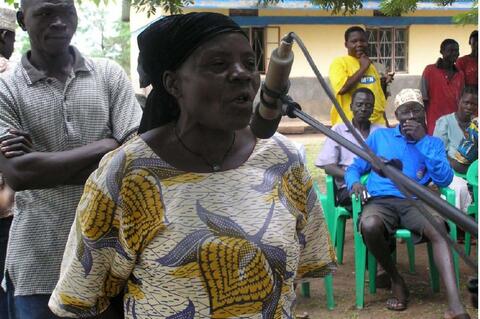
The Rural Radio Debates project links local people to policy makers by inviting those with influence and community members to attend topical and relevant debates. Using radio facilitates both the promotion of free media and active participation of citizenry, who can use the debate to bring up governance issues and therefore hold leaders accountable. The 20 radio stations were selected following a field visit and using a criteria that took into consideration regional spread, capacity, and interest of the radio stations to participate in the project. The project includes the following key activities.
Training
The first activity was to train one editor and programme producer from each selected partner radio station making. The goal of the training was to provide the overall objectives of the programme and focus on the leadership / supervisory elements that arise from the roles of editors and producers. Following this, 60 journalists, editors, and programme producers were trained on various topics with emphasis on practical aspects of identifying themes, mobilising the community, quality recording, and ensuring professionalism in all processes including moderation. Group discussions were held on the media environment and sensitivities needed to conduct an objective people focused radio debate. Refresher training for producers, editors, and journalists in content development and community engagement was also undertaken in April, 2010.
Regional editors
Ten Regional Radio Editors were commissioned in March 2010. The main role of the regional editors is to provide mentorship support to the radio stations, including selecting and coordinating themes for debate, as well as providing backstopping support to the radio stations.
Equipping Radio Stations
Each radio station was equipped with a computer to boost quality of production and storage Each radio station was also provided with 2 recorders to facilitate recording of debates at community levels and venues.
Knowledge products
A step-by-step guide to doing debates is being produced, designed to help the radio producers and journalists (debate moderators) produce better quality radio debates.
Panos Eastern Africa is also conducting analysis of the debates so far conducted based on audio, radio station reports, regional editors’ reports, and debate summaries, in order to generate common themes that can be published and disseminated to other stakeholders as a way to generate further debate on the issues generated through the debates.
Mentorship
Panos East Africa is undertaking structured visits to the radio stations, as a way of providing ongoing mentoring. This includes supporting radio stations that require developing training policies as well as producing mini audio clips of the debates to be uploaded onto the website
Democracy, Media
Panos Eastern Africa (PEA or Panos) is south-led regional information and communications for development, not-for-profit, non-government organisation that believes quality information is a right for all and a tool for development. Panos is a part of a global network of institutions and has a regional office in Kampala with country offices in Ethiopia and Sudan. Panos works with civil societies, the media, policy-makers, and international agencies in 8 countries in the East and the greater horn of Africa i.e. Uganda, Kenya, Tanzania, Ethiopia, Djibouti, Somalia, Eritrea, and the Sudan.
Panos East Africa, Deepening Democracy Programme
- Log in to post comments