










































The Role of Maternal Ideations on Breastfeeding Practices in Northwestern Nigeria: A Cross-section Study
Breakthrough RESEARCH/Nigeria (Anaba, Johansson, Abegunde, Hutchinson); Tulane University (Anaba, Johansson, Hutchinson); formerly Population Council (Abegunde, Hewett); Breakthrough ACTION/Nigeria (Adoyi, Umar‑Farouk, Abdu‑Aguye); Save the Children (Adoyi); Johns Hopkins Center for Communication Programs (Umar‑Farouk, Abdu‑Aguye)
"...ideations like knowledge (cognitive), beliefs (cognitive), self-efficacy (emotional) and social influence (social) under the cognitive, emotional and social ideational dimensions provide significant insights for SBC [social and behaviour change] programs and policy makers to improve health behaviors around breastfeeding practices..."
Despite the evidence of the beneficial effects of breastfeeding, optimal breastfeeding practices remain low in Nigeria. Such practices are often influenced by complex psychosocial influences - "ideations" - at cognitive, social, and emotional levels. These ideations are a primary focus of social and behaviour change (SBC) programmes as an intermediate pathway to positive health behaviours. This study builds on the Ideation Model of Strategic Communication and Behavior Change to examine the relationship between women's breastfeeding behaviours and ideations (e.g., knowledge, beliefs, norms) in northwestern Nigeria to understand which ideations that could influence early initiation of breastfeeding and exclusive breastfeeding (EBF) practices as a means to inform SBC programmes in this region.
This study was conducted in Kebbi, Sokoto, and Zamfara states within wards targeted for a United States Agency for International Development (USAID)‐funded health‐related SBC programme. A cross‐sectional population‐based survey of 3,039 women with a child under 2 years of age was conducted from September-October 2019. Respondents were asked about the 2 main outcomes, early initiation of breastfeeding and EBF, as well as breastfeeding-related ideations. Average marginal effects were estimated from mixed-effects logistic regression models adjusted for ideational and socio-demographic variables.
Overall, the study found low rates of early initiation of breastfeeding and EBF practices in the study area among women 15-49 years during their most recent pregnancy in the last 2 years: 42.1% of those surveyed practiced early initiation of breastfeeding, while 37.5% out of 721 infants aged 0-5 months were exclusively breastfed. Since breastfeeding is a cultural norm in northwestern Nigeria, the challenge is to shift the current early initiation of breastfeeding and EBF practices closer to optimal breastfeeding levels by emphasising the benefits of timely initiation of breastfeeding after delivery and delaying the introduction of any liquids (including water) and foods, for 6 months.
Consistent with the Ideation Model of Strategic Communication and Behavior Change, the study found that various cognitive, emotional, and social domains played a role in women's breastfeeding decisions. Specifically, it found that maternal knowledge about the benefits of breastfeeding to the mother (cognitive), knowledge of the appropriate time to introduce complementary foods (cognitive), beliefs on colostrum (cognitive), self-efficacy to breastfeed (emotional), and perceived social norms (social) impacted decisions about early initiation of breastfeeding and EBF in the study areas.
For example, women who knew that early initiation of breastfeeding was protective of newborn health had 7.9 percentage points (pp) higher likelihood of early initiation of breastfeeding practice than those who did not know. Women who believed colostrum was harmful had 8.4 pp lower likelihood of early initiation of breastfeeding and EBF than those without that belief. There was higher likelihood of early initiation of breastfeeding (5.1 pp) and EBF (13.3 pp) among women who knew at least one benefit of breastfeeding compared to those who did not know. Knowing the timing for introducing complementary foods and self-efficacy to practice EBF were also significantly associated with EBF practices.
Regarding emotional and social domains, women who felt confident to practice EBF were 13.1 pp more likely to practice EBF for the first 6 months of life than those who were uncertain. Belief that EBF is an important practice (injunctive norms) was also significantly associated with EBF practice, though not early initiation of breastfeeding. Women who reported that health providers mainly influenced their decision to breastfeed had a 23.7 pp increase in the probability to practice EBF compared to those who did not report health worker influence.
In conclusion: "Improving women's knowledge about breastfeeding and its benefits to themselves and their infants (knowledge), improving maternal education on the appropriate timing to introduce complementary feeding to their infants (knowledge), dispelling myths around colostrum as bad milk (beliefs), building women's confidence to exclusively breastfeed (self-efficacy), and leveraging on the influence of health providers (social influence) are the most important ideations for SBC programs to target to improve early initiation of breastfeeding and EBF breastfeeding behaviors for women in northwestern Nigeria."
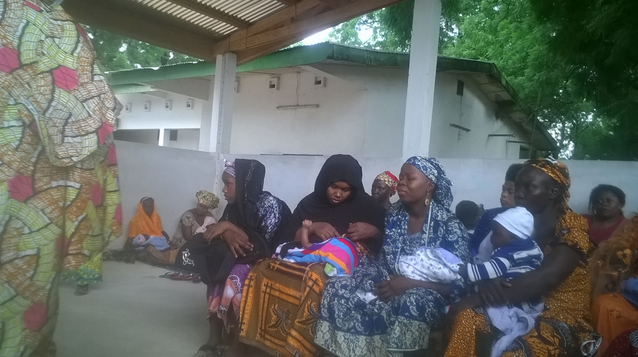
International Breastfeeding Journal (2022) 17:63. https://doi.org/10.1186/s13006-022-00500-w. Image credit: Pxhere (CC0 Public Domain)
- Log in to post comments