










































The Impact of Access to Immunization Information on Vaccine Acceptance in Three Countries
The Sidney Kimmel Medical Center at Thomas Jefferson University (Handy); Nemours/Alfred I. duPont Hospital for Children (Handy); Children's Hospital of Philadelphia (Handy, Powell, Moser, Japa, Offit, Steenhoff, Feemster); Collaborative Center for Clinical Epidemiology and Outcomes Research (Maroudi); Botswana-UPenn Partnership (Nfila, Tzortzi, Kouzeli, Theodoridou); Robert Reid Cabral Hospital (Japa); Ministry of Health, Gaborone, Botswana (Monyatsi); University of Pennsylvania (Luberti, Offit, Steenhoff, Shea, Feemster); Botswana-UPenn Partnership and University of Botswana (Steenhoff)
"These differences highlight the influence of context on vaccine acceptance and emphasize the importance of region- or country-specific research to understand local drivers of vaccine acceptance."
This study explored attitudes and beliefs related to vaccine acceptance and the methods of communication about vaccines leading to vaccine acceptance in 3 countries in diverse regions of the world and with immunisation programmes in various stages of development: Botswana, the Dominican Republic (DR), and Greece. It has been suggested that region- or country-specific research is crucial given the complex array of individual, sociocultural, and political factors that influence vaccine acceptance.
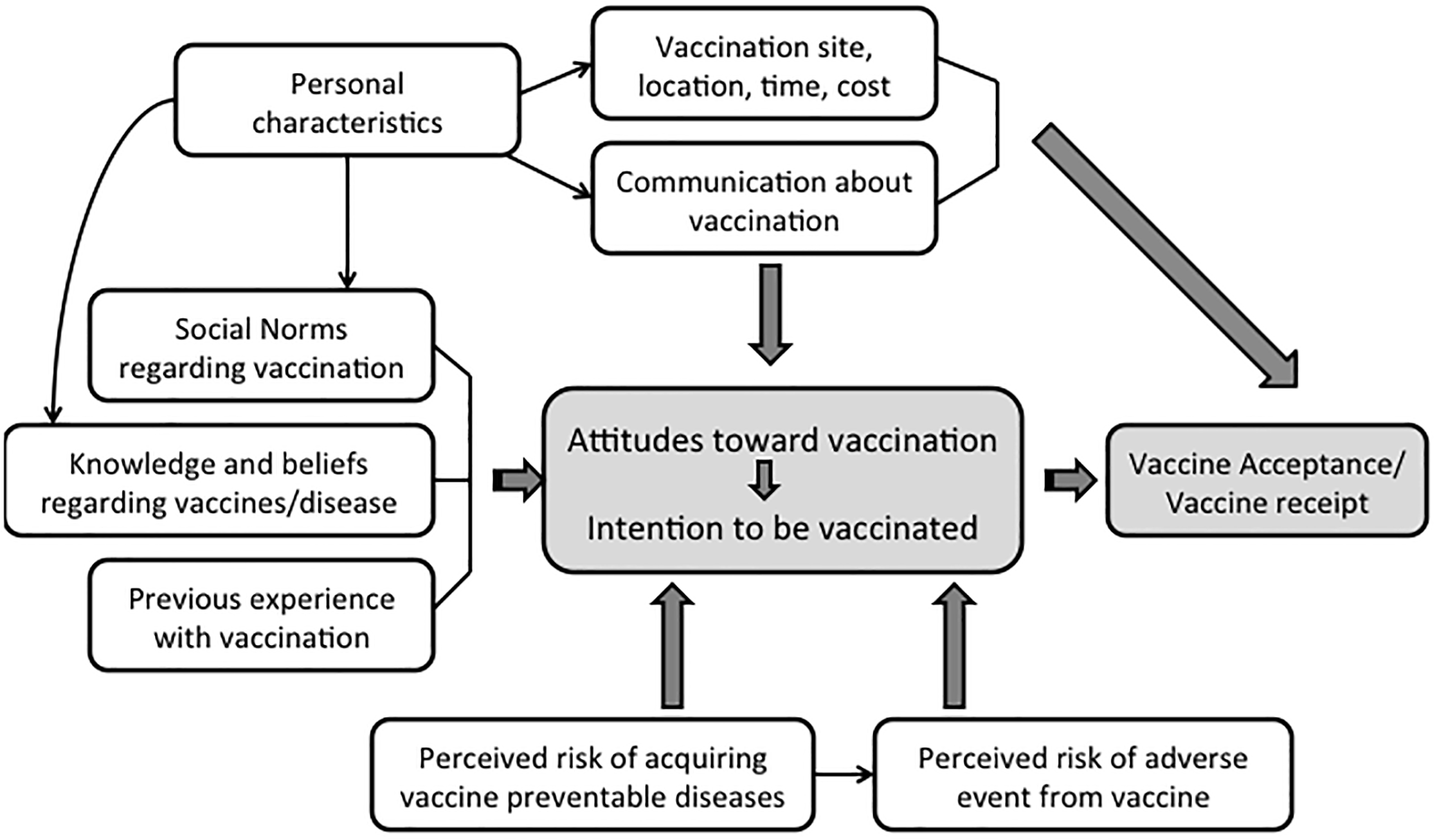
The researchers conducted 37 focus groups and 14 semi-structured interviews with 96 providers and 153 caregivers of children younger than 5 years of age in Botswana, the DR, and Greece. Questions for both the focus groups and interviews were read from a standardised guide eliciting knowledge and beliefs about vaccines and vaccine-preventable diseases, sources of vaccine-related information, influence of popular media on vaccine-related beliefs, facilitators and barriers to obtaining vaccines, and attitudes toward the health care system. The focus group guide was developed based upon a conceptual framework grounded in the health belief model but also integrating theoretical models related to vaccine hesitancy.
Summary results include:
- Domain: Knowledge and communication - Results demonstrate the relative impact of information from health care providers, the media, community members, and society in each country.
- A dominant theme that emerged was the recognition of health care providers as the main source of vaccine information for caregivers. Similarly, health care providers recognised their role as information sources for their patients and looked to medical literature primarily as an information source to maintain their knowledge.
- Forms of media used by study participants varied between countries, with emphasis on: radio, television, and newspapers in Botswana; television and the internet in the DR; and the internet in Greece.
- In Botswana, participants noted that media delivered positive messages about vaccines usually in the form of public service announcements (PSAs) or general updates on new vaccines that became available. If media messages were negative or raised questions, participants indicated that they would confirm the information with health care providers rather than trust the media's negative message about vaccines.
- In the DR, while the majority of information received through media was reported as supporting acceptance, many participants pointed out that access to television or the internet is not consistent throughout the country, possibly limiting the impact of this information.
- In Greece, caregivers reported paediatricians as their main source of information for vaccination. However, caregivers were frequently exposed to media messages, especially through the internet. A significant number of caregivers expressed a desire to discuss any negative concerns with their family doctors before making vaccine decisions. However, some caregivers also described a direct influence of media messages on their decision-making regarding vaccination, regardless of consultation from their family doctor.
- Across all 3 sites in both caregiver and provider focus groups, the theme of insufficient or ineffective communication about vaccines was prevalent, especially in Greece.
- In Botswana, providers indicated that increasing education through media with positive messages might be helpful. Caregivers suggested a number of methods to increase information availability, including increasing information on "Under 5" cards, increasing media presence such as billboards, and having more information sessions presented by health care providers.
- In the DR, more information was requested to increase caregivers' knowledge and for clarification of confusing messages. Caregivers requested more information through radio, television, and internet sources, whereas providers suggested increased information dissemination from the public health system. Providers also noted the distance that many people live from health care settings and the need to disseminate information through newspapers or television more frequently than just during outbreaks.
- In Greece, many caregivers reported inconsistent messaging coming from health care providers, often creating confusion. Caregivers suggested that they would appreciate more reliable, consistent information from media sources (such as television) as well as information circulating through the educational system. To minimise conflicting statements, they also expressed the desire for a single responsible body that would coordinate and communicate up-to-date and consistent information about vaccines.
- Domain: Attitudes and interactions with the health care system
- In Botswana, participants enthusiastically expressed trust in the government and closely aligned the health care system and government as one unit. Caregivers rely on health care providers for information yet express concerns about providers' knowledge, skills, or compassion.
- In the DR, there were few comments related to trust in the system or government. Similar to Botswana, participants reported experiences with health care workers that both supported and set up barriers to immunisation.
- In Greece, participants reported significant barriers related to access to vaccination and a lack of public health infrastructure. This resulted in caregivers choosing to obtain vaccines from the pharmacy and pay for vaccine administration in the private sector rather than trying to navigate the public system.
Reflecting on these findings, the researchers observe that, while both caregivers and immunisation providers from a wide range of communities in Botswana, the DR, and Greece report high levels of support for vaccination, a need was clearly expressed for increased access to accurate and reliable information about vaccines. In settings with expanding immunisation programmes like those studied here, access to information about newly introduced vaccines may be particularly important. "Recognizing which source of information is most relied upon by caregivers and providers and which communication method is most effective is essential when considering strategies to improve local vaccine acceptance." To address some of the challenges identified by participants related to knowledge and attitudes, the researchers suggest, "vaccine delivery system has the powerful ability to be an influential and cost-effective purveyor of vaccine information."
That said, knowledge is necessary but not sufficient to build trust in, and acceptance of, vaccines - that is, to change behaviour. "A lack of confidence in vaccines in the face of a knowledgeable public is known as the vaccine confidence gap and indicates that an additional mix of factors affects the public's trust and subsequent vaccine acceptance." Determining how to address this is not straightforward; the results "illustrate the complexity of factors influencing vaccine acceptance and also suggest potential targets to enhance the success of immunization programs." The researchers discuss some concrete implications of the research for each of the 3 countries studied. They then indicate that "Future quantitative work based on this study should focus on identifying characteristics of populations that correlate with vaccine acceptance and on identifying strategies to remedy the identified barriers."
A concluding thought: "working with local teams and developing materials that address local situations and concerns are imperative to successful implementation of new or maintenance of existing vaccine programs."
PLoS ONE 12(8): e0180759. https://doi.org/10.1371/journal.pone.0180759
- Log in to post comments