










































Final Evaluation: Radio for Peacebuilding Africa
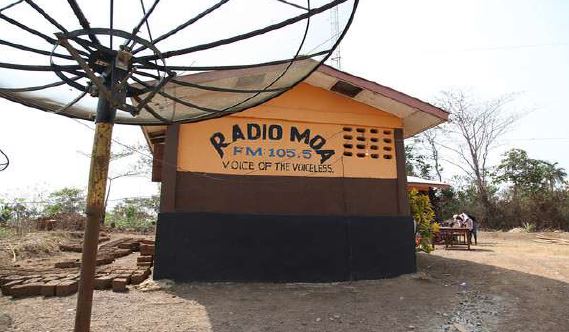
"The quantitative and qualitative review of the web-based component of the RFPA [Radio for Peacebuilding Africa project] clearly showed that the global audience of the RFPA website has increased significantly in the third phase of the project, particularly among African members. From the end of Phase II to the end of Phase III, the number of subscribers from African countries registered a sharp 140% increase."
This is one of the findings related to Search for Common Ground (SFCG)'s web-based platform created as part of the Radio for Peacebuilding Africa (RFPA) project, which ran from 2003 until 2013. This 100-page report discusses evaluation findings, focusing on the third phase of the intervention. The third phase emphasised deepening the impact of previous programme activities and concentrated on the development and strengthening of the web-based resource for journalists, which provided guidebooks, sample programming, bi-weekly updates, and annual awards competitions with in-country programming in the eight countries where SFCG runs specific national programmes.
This third phase built on two previous stages of the project. The first phase focused on building capacity and relationships among government, media, and civil society. Then, in the second phase (2006-2009), SFCG worked to increase partner radio stations' programming capacity and foster a greater involvement of SFCG with government authorities.
This evaluation was conducted by Universalia, based on: a desk review; a review of the pages and contents of the web-based resource; interviews with key stakeholders - both at headquarters level and in the field through two field missions which took place in Guinea and Burundi; and an online survey.
The evaluation discusses how the web-based platform is a useful tool, particularly among African members, noting that the "frequency of use of the website demonstrates continuous and renewed interest." From January 2010 to June 2013, "the website received 7,050 visits from African members, which represents 39% of the total number of visits (17,987), almost twice as the number of hits from Europe (4,380) or the Americas (4,331). Close to two thirds of these visits came from new visitors who had not visited the website before." Similarly, the web resource saw increased use over time. For example, in 2011, the RFPA website received 5,995 visits from 137 countries or territories, an increase from 2,523 members from 120 countries in 2010."
In terms of content, the assessment found that resources such as guidebooks and training manuals are the most popular knowledge and management products, followed by the newsletter, which is "appreciated by most recipients, mostly as a grant, scholarship or training resource." In general terms, the RFPA website is largely perceived as being a "user friendly tool" - the products of which satisfy two-thirds of its regular users. "Most of the respondents of this evaluation survey concluded overwhelmingly that it was easy (66%) or very easy (19%) to find specific information on the RFPA website. The information contained on the RFPA website also proved to be helpful (90%), easily accessible (93%), clear and understandable (89%), and that the presentation of the website was professional (69% - with a surprising 31% of 'Neutral' answers to this question)."
On the other hand, one criticism of the web platform is weak use of social media and very little harnessing of the power of new mobile phone innovations. The website did not integrate any icon or hyperlinks that would refer to a Facebook page, a Twitter account, or a YouTube Channel. These social media might be useful tools to achieve the objectives of the project and "would definitely help reach a wider audience."
The report also discusses assessments of the RFPA work in Burundi and Guinea. While each intervention had slightly different approaches, the overall findings were that country interventions successfully improved peacebuilding and accountability. The RFPA initiatives were said to have been able to demonstrate that local regional or communal elected or non-elected authorities could be confronted by their constituents or by national or local media players through transparency, dialogue, and information sharing, which are the main principles presiding over the concept of "accountability". In both countries, there is a need to continue this work and to consider issues of sustainability.
Based on the findings, the report outlines a number of recommendations, which are each discussed in more detail in the report:
- SFCG RFPA should implement a process to a completely update its database of correspondents.
- "SFCG should continue the implementation and management of the RFPA website in order to continue supporting capacity development of national journalists in Africa."
- SFCG should take into account new influential media tools and structures (such as the web-based media), as their influence is growing among the young and the expatriate Guineans and Burundians.
- "SFCG should continue with the RFPA Awards competition."
- In Guinea, SFCG should start training a local structure that could take over the RFPA project and point it to potential long-term sponsors.
- "In Burundi, SFCG should prepare the strategic and programmatic follow up of the RFPA 'Accountability Culture' initiative."
- "In Guinea, SFCG should accompany the country in its process of setting a self-regulatory body for the media."
- "In Guinea, SFCG should pursue its communication trainings for local, national and even opposition leaders in order to make their public appearances more impactful and enriching for the sake of peace and stability in the country."
- "SFCG should invite media owners and leaders (not only professionals) to training sessions on economic sustainability as a tool to improve their ethics and social responsibilities.
Radio for Peacebuilding Africa website on July 13 2015.
- Log in to post comments