










































Time to read
less than1 minute
Essential Malaria Action Guide for Kenyan Families
Image
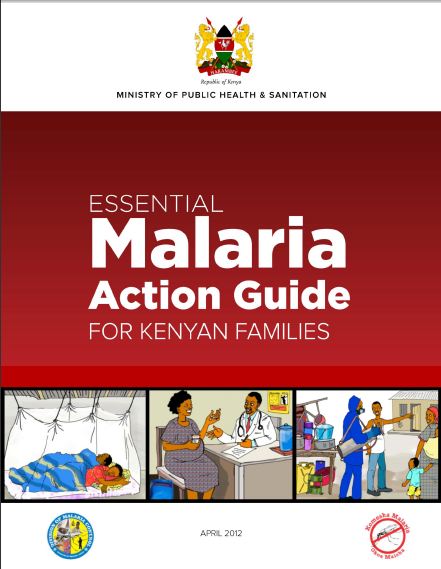
SummaryText
This Essential Malaria Action (EMA) guide, developed with a coalition of partners and published by the Division of Malaria Control (DoMC) Kenya, is designed to assist district health managers, health workers, and non-governmental organisation (NGO) partners in planning and implementing malaria social and behaviour change communication (SBCC) activities at community level. The guide seeks to ensure harmonisation of communication approaches and promotes seven essential malaria actions that fall into four categories: long-lasting insecticide-treated net (LLIN) use, malaria case management, indoor residual spraying, and prevention of malaria during pregnancy.
The guide seeks to enable district health teams, partners, and stakeholders implementing advocacy, communication, and social mobilisation (ACSM) activities to:
The guide seeks to enable district health teams, partners, and stakeholders implementing advocacy, communication, and social mobilisation (ACSM) activities to:
- Systematically follow a SBCC approach to select the appropriate malaria communication interventions;
- Harmonise their messaging so that it focuses on the performance of essential actions by the target audience; and
- Eliminate approaches that no longer support malaria control.
Publication Date
Languages
English
Number of Pages
19
Source
C-Change website on May 8 2012.
- Log in to post comments