










































Communication for Humanitarian Action Toolkit (CHAT)
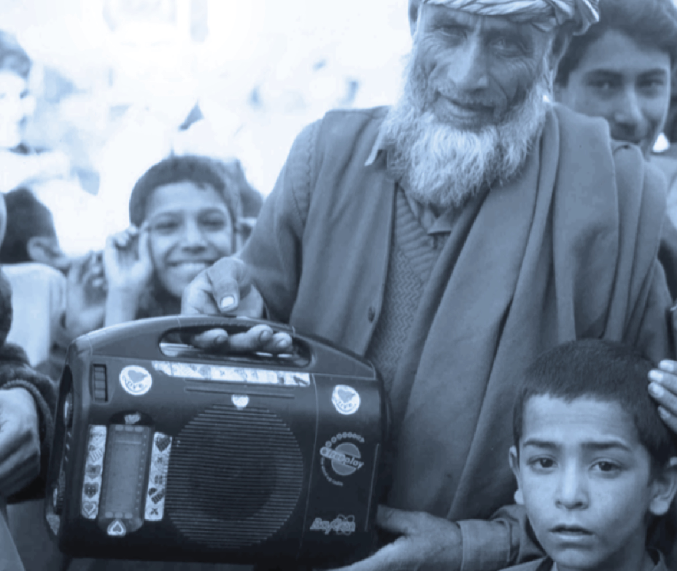
"Well-planned communication can help to promote community resilience and reduce vulnerability to a wide range of disasters and emergency situations."
From the University of Adelaide, Applied Communication Collaborative Research Unit (ACCRU), the Communication for Humanitarian Action Toolkit (CHAT) provides guidance to humanitarian and development organisations in the area of emergency communication strategy design, implementation, monitoring, and evaluation. It focuses on providing essential emergency warnings, as well as communication that promotes behaviour change, community mobilisation, and action. CHAT is practice focused and designed to help users to quickly develop a communication for humanitarian action strategy using a range of step-by-step templates and short workshop facilitation guides. All references cited in this toolkit can be located in the "Resource Bank" sections that accompany the various sections.
CHAT was a collaborative effort among partner organisations, with the United Nations Children's Fund (UNICEF) and the International Federation of the Red Cross (IFRC) leading the process. The toolkit builds on previous UNICEF (2006) work undertaken on emergencies, notably its publication Behaviour Change Communication in Emergencies: A Toolkit. It also draws on a wide range of methods and practices associated with Communication for Development (C4D) that cut across a range of programme delivery areas, including health, nutrition, water, sanitation. and hygiene (WASH), and child protection.
This toolkit is driven by a core set of communication for humanitarian action principles. These include:
- Be prepared and communicate now - "Planning and preparation for communicating during emergencies...should ideally take place before an emergency occurs. Based on experience and evidence from past emergencies, begin by assessing results of past initiatives and identifying what worked and what didn't. This will help you to understand how best to revise or adapt emergency preparedness and response plans. It will also enable you to obtain information, press releases, mass-media announcements and community mobilization resources already in place for immediate use should an emergency occur. Be ready with sample messages and materials that have been pretested such as those on maternal health, nutrition, immunization, disaster-related stress, water and sanitation, and child protection. If not prepared, it is still critical that information is released about the emergency to the general public as quickly as possible through the most appropriate communication options. See Table 2 [pages 16-25] for a quick guide to using the CHAT design templates if: (i) preparing for an emergency; or (ii) responding to an emergency without prior preparation."
- Work with partners and coordinate - "...Engaging with partners, especially from the communication sector, is essential to getting lifeline messages across to the general public. It is important, where possible, to build on existing communication assets and capacity. Establishing communication partnerships and promoting coordination can help to reduce duplication and increase the potential for sharing evidence, developing consistent messaging and collective lesson learning. This can also help prevent information overload, confusion and misinformation amongst affected communities. Effective coordination relies on clearly defined roles and responsibilities amongst partners."
- Engage with communities - "...Always build on what people already know about emergencies and recognize their strengths and desire to protect and rebuild their communities. When engaging with communities, remember that they are diverse and specific efforts may be required to ensure all members are included in preparedness, emergency response and recovery activities. Take care to identify and include vulnerable or excluded groups in your plans. Communication that engages communities establishes mechanisms for dialogue and collective action, be it in preparation for or response to emergencies."
- Build an evidence base through formative research - "...Ideally, all communication for humanitarian action initiatives should be based on formative research, although such work can be challenging to do in the initial stages of an emergency. During the initial phase of an emergency, generic warning and protection messages are often provided to the general public. However, as an emergency develops, it is important that evidence is gathered to help you identify how to respond to the emergency and address the key information needs of 'at-risk' groups....Rapid assessment techniques and methodologies can help you to 'find out fast,' and 'finding out' is important because emergencies change over time and the needs of affected populations change with them. Evidence from research also helps you to build a constructive dialogue with affected communities, which allows them to critique humanitarian responses, which in turn helps to build accountability within the humanitarian sector."
- Promote awareness and action - "...Action-orientated communication typically contains an instruction to follow, a behaviour to adopt, a measure to take or identify where a service may be obtained..."
- Whenever possible, test your approach - "...For communication messages and materials, it is important to pretest these for comprehension, acceptability, persuasiveness and relevance with affected populations prior to production and release to the general public. (See Figures 4 and 5 [pages 55 and 56] on pretesting outputs)..."
- Assess your impact - "...Were your messages clear? Did they reach the groups you had in mind? What went wrong? Did it create the impact you hoped for? Asking these kinds of questions will help you to reflect on how things could be improved, adjusted, done better next time, and inform future disaster-preparedness and response processes."
68
New Media Development Publications January - June 2016, sent from CAMECO to The Communication Initiative on August 19 2016.
- Log in to post comments