
























African development action with informed and engaged societies

After nearly 28 years, The Communication Initiative (The CI) Global is entering a new chapter. 

Following a period of transition, the global website has been transferred to the University of the Witwatersrand (Wits) in South Africa, where it will be administered by the Social and Behaviour Change Communication Division. Wits' commitment to social change and justice makes it a trusted steward for The CI's legacy and future. 

On the transfer, co-founder Victoria Martin expressed her pleasure to see this work continue under Wits' leadership, knowing that co-founder Warren Feek (1953–2024) would have felt deep pride in The CI Global's Africa-led direction. 

As Wits, we honour the team and partners who sustained The CI for decades and look forward building from that strong base. This includes co-founders Warren Feek (1953-2024) and Victoria Martin as well as La Iniciativa de Comunicación (CILA), which continues independently at lainiciativadecomunicacion.com with links to The CI Global site. We are also eager to forge new partnerships and entertain new ideas as we consider how best to contribute to social and behaviour change in our rapidly evolving environment.

If you are joining the International Social and Behaviour Change Communication (SBCC) Summit in Panama, please join Wits and CILA on Monday, 22 June, to share your thoughts and suggestion for the relaunch of the Communication Initiative. We will be in Pacifica 5 from 12-1:25 for the Refuel, Reflect, and Renew Lunch Series: The Communication Initiative: celebrating a driving force for Communication for Social Change and the way forward. We will reflect on the legacy of Warren Feek and family in creating the Communication Initiative, consider the contributions of CI over the years and then turn our attention towards the future in this dynamic session. 

If you are unable to join us in Panama, we still want to hear from you. Please contribute your thoughts by following this link: https://redcap.link/CommunicationInitiative2026 or reaching out to ci_surveys@commint.com

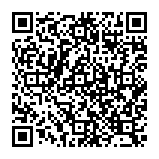
You can also follow the QR Code:

 https://redcap.link/CommunicationInitiative2026

Time to read
1 minute
Read so far

Africa Malaria Day - Burkina Faso

0 comments
Launched by the USA-based Maternal & Neonatal Health (MNH) Program, this one-week programme was aimed at promoting strategies to prevent malaria. The programme was part of marking Burkina Faso's third anniversary of Africa Malaria Day on April 25 2003. A particular emphasis was placed on promoting use of Insecticide-Treated bed Nets (ITNs) and effective antimalarial treatments on the part of women and young children. The project utilised activities that the organisers believed were best suited to communicate malaria prevention, including entertainment, discussion, and provision of information.
Communication Strategies

During the course of the week, there were speeches on topics related to malaria prevention and control, skits by local theatre groups, and demonstrations of proper use of ITNs.


Specific activities included:

  • Screenings of an information film in Kouritenga province. Following each screening, community members discussed the effects of malaria and learned about the benefits and use of ITNs. More than 3,000 people watched the film and participated in the dialogue.
  • Dissemination of key malaria messages in French and the local language on three radio stations.
  • A drawing contest for students to depict their impressions of malaria; 2,850 students from 19 schools within Koupéla and Pouytenga participated.
  • A contest based on a 10-question survey on key malaria messages. Two thousand questionnaires were distributed, and 53 contestants achieved a perfect score.
  • Placement of posters outlining Intermittent Preventive Treatment (IPT) protocol in each of the district health centres to serve as job aids for providers and as a source of information for clients.
Development Issues

Health, Children, Women.

Key Points

The MNH Program closed on September 30 2004. The U.S. Agency for International Development (USAID)'s follow-on project for maternal and newborn health, ACCESS, started on October 1 2004.

Partners

MNH Program, Plan, Santé Familiale et Prévention du SIDA (SFPS), WHO, and UNICEF.